Category: Sociology Mains

  • Characteristics of indian culture short note Upsc

    Characteristics of indian culture short note Upsc

    Characteristics of Indian culture

    Indian Culture is very old and changed continuously with time retaining its core.

    It is existing for the past 5000 years and remains intact despite many changes.

    Over 6000 years many civilizations appeared and then disappeared but due to religious dominance, culture Indian culture and civilization stood tall across the world.

    This is due to some of the characteristics or Beliefs of Indian Culture as follows.

    Beliefs of Indian Culture

    Doctrine of Karma

    The belief in Karma made people think that the present life is linked to the next birth and previous birth.

    Every one born because of past deeds and will be born due to deeds done at present.

    The belief in the doctrine of Karma has compelled the people to adhere to good, means of social wellness and believe in Caste System.

    Rituals such as fasting, birth, death, and marriage are connected to religions.

    The religion and belief in Karma made people build the spirit of tolerance in Indian Society.

    Dharma

    Dharma is the core of Indian Culture and India’s social thought. Religion and spirituality were attained due to the religion influencing the philosophy, culture, politics and economics of India.

    This is the reason why spiritual life in India is called Karma Bhoomi, Tapo Bhoomi and Punya Bhoomi.

    Science Behind Indian Culture

    The scholars came to the conclusion that the Indian culture is Religio-Philosophical but it is not correct.

    Most of the early work is in Sanskrit and Pali.

    Indians have used the concept of zero, and are well-versed in mathematics such as square roots, cube roots, geometry, etc.

    Charaka Samhita, Ashtanga Haridaya, Ayurveda, etc are known records of the Indian Medical System.

    Sushruta Samhita was well-versed in Human Surgeries.

    In the field of metallurgy Iron, zinc, copper, and the making of Alloys are well known.

    Ancient India Architecture is well known such as Temples, forts, Pillars, etc.

    The Indian textile industry is known worldwide and India reached supremacy in the Cotton and silk industry in the ancient period itself.

    Divine Importance of Animals and Rivers

    Workshop of nature and natural bodies are a very important part of the Indian culture and Indians have an attachment to Rivers, mountains, etc. The prime important rivers of Indian Culture are Ganga, Yamuna, Sarasvati, etc.

    Animals have an important place in Hindu Religion, especially cows.
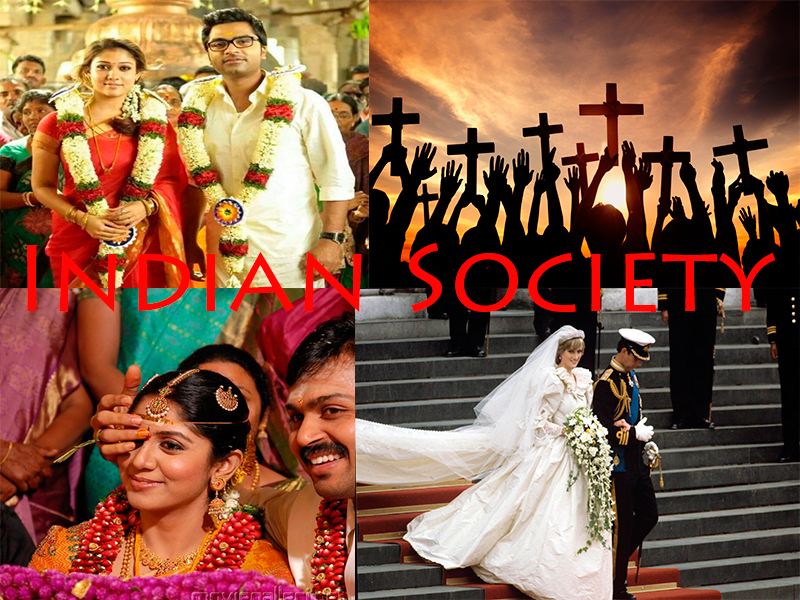
  • Salient Features of Indian Society

    Salient Features of Indian Society

    India is a plural society, that its unity and diversity. It is grand mixtures of cultures, language, religions, caste, and communities and upheld by unity.

    Several foreign invasions such as Mughal, British, etc, the national unity is maintained in spite.

    India Society is also called Mosaic on Culture.

    The cultural uniqueness gave the Indian Society to revolt against the British emperor.

    Indian Society has good cultural tolerance due to the existence of various cultures, religions, and languages.

    From the 19th century, there is an emergence of new factors to the existing cultural diversity.

    This happened due to the common legal system, administration, and education system throughout the country by the Indian Penal Code.

    The impact of westernization has led to the introduction of modern communication such as posts, telegraphs and modern transport systems such as Railways.

    The introduction of English played an important role in Indian Society.

    India has its own religious and ethnic history which dates to more than 5000 years ago, starting from Indus Valley Civilization.

    During these periods various immigrants, linguistic and religions had mingled with the native people and contributed to the rich, diversified Indian Society.

    Aryans, a pastoral community came via Khyber channel, after the Indus valley civilization are well versed in Poetry, Philosophical and rituals.

    Aryans considered themselves superiors, and practiced Endogamy (Marrying within their own people or community) and practiced elaborate rituals for community purity and pollution.

    Aryans introduced the Varna (Color/ Complexion) and Jati (Caste) System.

    The Indo-Aryans have broken into three groups namely Warriors and aristocrats called Rajanya, Religious Priests called the Brahmin and Cultivator or Farmer called Vaisyas and they called non-Indo Aryans as Sudras.

    Apart from the Four varna system, the fifth group of people whose status was very low in this society propagated by Aryans called the Panchama or Avarna (Scheduled Caste).

    The present-day Indian Society and Indian Culture is a result of cultural contact, conflict, and integration.

    The influence of the west gives another dimension to Indian society and sociocultural dynamics.

    Indian society is basically a traditional system, its modernity arrived from the west from Technology to Culture.

    Moreover, there have been a lot of Western countries that ruled the Indian Society such a Dutch, French, etc but the Influence of British influence is strong in India.

    As already said, the Indian society is highly traditional where as Western culture was modern in terms of rational thinking, individualism( Habit of being independent and self-reliant) and utilitarianism (Culture that promotes happiness and rejects unhappiness or harm).

    Also, western culture promotes Egalitarianism ( All people are equal irrespective of color, language, and religion) and universalism.

    With the arrival of the British, new thinking or society is formed.

    The western system impacted the administration as well.

    British introduced English in education and also secular education.

    Before the British, administration and official language in the India Sub continent were Sanskrit, Persian, and Urdu.

    British changed the official language to English.

    The English has become a window to the outside world and exposed Indians towards the system of egalitarianism, rationalism, and secularism.

    The modern transport and communication increase mobility in the country.

    The printing, postal and radio spread new ideas and dimensions of the country.

    These new ideas awakened the people from traditional evils, there is a lot of social changes that happened to the Indian Society.

    The Introduction of India Penal Code, there happen to change in the legal and justice system, equal before the law was felt throughout the country.

    The industrialization and urbanization are the important factors of change.

    The industrialization  brought were the new determinants of social status in Indian society.

    A new feel called Nationalism arrived with united the whole Indian Society.

    It is a very crucial thing happened due to Westernization, it resulted in the new Westernized Elite in place traditional Elite.

    The new Westernized Elite brought new ideas and value, it also proposed the new way of Hinduism and the caste system, which was much more Humane and of social order.

    Indian Society did not change to a western culture entirely but surprisingly it adapted and retained its core tradition and values with Western Culture.

    Characteristics of Indian Culture and Society

* * All the Notes in this blog, are referred from Tamil Nadu State Board Books and Samacheer Kalvi Books. Kindly check with the original Tamil Nadu state board books and Ncert Books.