Category: Civil Services Exam
-
Chaibagaan time for Upsc
Chaibagaan Time
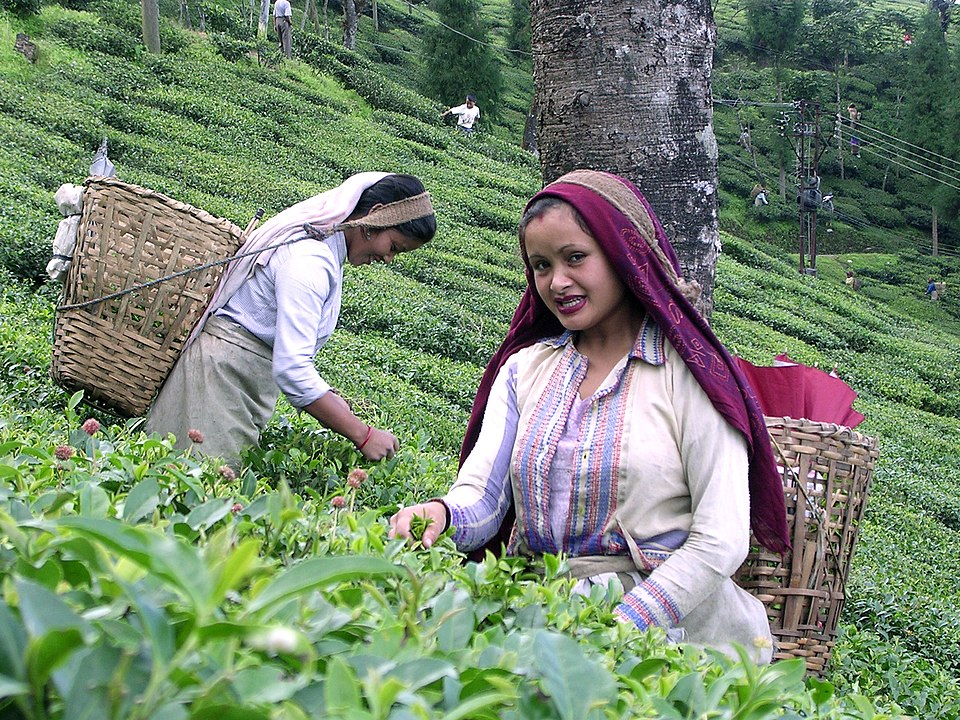
Chaibagaan time is an unofficial time that is followed in Assam’s tea garden, where the work is dependent on sunlight. ‘Chai’ means tea, and ‘bagan’ means garden.
The IST was introduced on September 1, 1947. It corresponds to the time near Uttar Pradesh’s Mirzapur, with states west of this longitude receiving more daylight than those east of it. It is also ahead of the Coordinated Universal Time (UTC, 0.0.0).
UTC or Greenwich Mean Time is based on the imaginary longitude line running through Greenwich in the UK. Based on Greenwich time standard, through which clocks and time are regulated throughout the world. UCT is within about one second of mean solar time at 0° longitude and not adjusted for daylight saving time.
The necessity of two time zones in India
As per a new study by the CSIR-NPL, if India has two time zones, this will increase the overall productivity of the North-Eastern states and will lead to less power consumption.
The NPT has examined the feasibility of implementing the second time zone for North-Eastern states like Meghalaya, Assam, Nagaland, Arunachal Pradesh, Manipur, Mizoram, Tripura and the Andaman and Nicobar Islands, which will be 6.30 hours ahead of UTC to save daylight. Where other parts of the country follow 5.30 Hours ahead of UTC as usual.
India currently observes a single time zone based on the longitude passing through 82°33′E, which will become IST-I under the new proposal. It will cover the regions between longitudes 68°7′E and 89°52′E.
-
History of post colonialism in India Upsc
Freedom from colonial rule came with a price. The partition of India involved dividing the provinces of Bengal and Punjab into two. Though not envisaged at the time of the division, it was followed by the migration of Hindus from East Bengal to West Bengal and Muslims from Bihar and West Bengal to East Bengal. Similarly, Hindus and Sikhs in West Punjab had to migrate to eastern Punjab and Muslims in eastern Punjab to western Punjab. The boundaries between India and Pakistan were to be determined on the composition of the people in each village on their religion, and villages where the majority were Muslims were to constitute Pakistan and where the Hindus were the majority, to form India.
There were other factors too: rivers, roads and mountains acted as markers of boundaries. The proposal was that the religious minorities – whether Hindus or Muslims – in these villages were to stay on and live as Indians (in case of Muslims) and Pakistanis (in case of Hindus) wherever they were.
There was a separate scheme for those villages where the Muslims were a majority and yet the village not contiguous with the proposed territory of Pakistan, and those villages where the Hindus were a majority and yet not contiguous with the proposed territory of India: they were to remain part of the nation with which the village was contiguous. A new complication had arisen by this time, and that was the recognition of Sikhs as a religious identity in Punjab, in addition to the Hindus and the Muslims; the Akali Dal had declared its preference to stay on with India, irrespective of its people living in villages that would otherwise become part of Pakistan.
This complex situation was the consequence of the fast pace of developments in Britain on the issue of independence to India. The declaration on February 20, 1947, by Prime Minister Atlee, setting June 30, 1948, for the British to withdraw from India and Mountbatten’s arrival as viceroy, replacing Wavell on March 22, 1947, had set the stage for the transfer of power to Indians. This was when the Muslim League leadership had gathered the support of a vast majority of the Muslim community behind it and disputing the claims of the Congress to represent all Indians. On June 3, 1947, Mountbatten advanced the date of British withdrawal to August 15, 1947. As for the communal question and the issue
of two nations, the proposal was to hand over power to the two successor dominion governments of India and Pakistan. The division of Bengal and the Punjab, as proposed, meant partition – a reality to which Congress finally reconciled. The Mountbatten plan for independence, along with the partition of India, was accepted at the AICC meeting at Meerut on June 14, 1947.
Gandhi, who had opposed the idea of division with vehemence in the past, now conceded its inevitability. Gandhi explained the change. He held that the unabated communal violence and the participation in it of the people across the Punjab and in Bengal had left him and the Congress with no strength to resist partition. Sadly, the canker of communalism and the partition system that the colonial collaborators produced took its toll on the infant Indian nation. It began with the assassination of the Mahatma on January 30, 1948. How did the infant nation take up the challenge, resolving some and grappling with some others in the years to come?
Consequences of Partition
The challenges before free India included grappling with the consequences of partition, planning the economy and reforming the education system (which will be dealt with in the following lesson), making a Constitution that
reflected the aspirations kindled by the freedom struggle, merger of the Princely states (more than 500 in number and of different sizes), and resolving the diversity based on languages spoken by the people with the needs of a nation-state. Further, a foreign policy that was in tune with the ideals of democracy, sovereignty and fraternity had to be formulated.
The partition of India on Hindu–Muslim lines was put forth as a demand by the Muslim League in vague terms ever since its Lahore session (March 1940). But its architecture and execution began only with Lord Mountbatten’s announcement of his plan on June 3, 1947 and advancing the date of transfer of power to August 15, 1947. The time left between the two dates was a mere 72 days.
Sir Cyril Radcliffe, a lawyer by training with no exposure to India and its reality, was sent from London to redraw the map of India. Its execution was left to the dominion governments of India and Pakistan after August 15, 1947.
Radcliffe arrived in India on July 8, 1947. He was given charge of presiding over two Boundary Commissions: one for the Punjab and the other for Bengal. Two judges from the Muslim community and two from the Hindu community were included. The commissions were left with five weeks to identify villages as Hindu or Muslim majority on the basis of the 1941 census. It is widely accepted that the census of 1941, conducted in the midst of World War II, led to faulty results everywhere.
The commissions were also constrained by factors such as the contiguity of villages and by the demands of the Sikh community that villages in West Punjab, where their shrines were located, be taken into India, irrespective of the population of Sikhs in those villages. The two commissions submitted the report on August 9, 1947. Mountbatten’s dispensation, meanwhile, decided to postpone the execution of the
boundaries to a date after power was transferred to the two dominions. The contours of the two dominions – India and Pakistan – were drawn in the scheme on August 14/15, 1947, insofar as the administration was concerned; the people, however, were not informed about the new map when they celebrated Independence Day on August 14/15, 1947.
Radcliffe’s award contained all kinds of anomalies. The provincial assembly in Punjab had resolved that West Punjab would go to Pakistan. The other provinces, which were geographically contiguous with Pakistan, such as Sind, Baluchistan and the North-West Frontier Provinces, followed this. Similarly, the Bengal Assembly resolved that the eastern parts of the province were to constitute Pakistan on this side.
The award Radcliffe presented, on August 9, 1947, marked 62,000 square miles of land that was hitherto part of the Punjab to Pakistan. The total population (based on the 1941 census) of this region was 15,800,000 people, of whom 11,850,000 were Muslims. Almost a quarter of the population in this territory – West Punjab – were non-Muslims, and the Mountbatten Plan, as executed by Sir Radcliffe, meant they continued to live as minorities in Pakistan. Similarly, East Punjab, which was to be part of India, was demarcated to consist of 37,000 square miles of territory with a population of 12,600,000. Of this, 4,375,000 were Muslims. In other words, more than a third of the population in East Punjab would be Muslims.
The demographic composition of the Indian and Pakistani parts of Bengal was no less complicated. West Bengal, which remained part of India, accounted for an area of 28,000 square miles with a population of 21,200,00 out of which 5,30,000 were Muslims; in other words, Muslims constituted a quarter of the population of the Indian part of the former Bengal province. Sir Radcliffe’s commission marked 49,400 square miles of territory from former Bengal with 39,100,000 people for Pakistan. The Muslim population there, according to the 1941 census, was 27,700,000. In other words, 29 per cent of the population were Hindus. East
Pakistan (which became Bangladesh in December 1971) was constituted by putting together the eastern part of divided Bengal, the Sylhet district of Assam, the district of Khulna in the region and also the Chittagong Hill tracts. Such districts of Bengal as Murshidabad, Malda and Nadia, which had a substantially large Muslim population, were left to remain in India. The exercise was one without a method.
The redrawn map of India was left with the two independent governments by the colonial rulers. It was left to the independent governments of India and Pakistan to fix the exact boundaries. However, the understanding was that the religious minorities in both the nations – the Hindus in West and East Pakistan and the Muslims in India, in East Punjab and West Bengal, as well as in United Provinces and elsewhere – would continue to live as minorities but as citizens in their nations.
After the partition, there were as many as 42 million Muslims in India and 20 million non-Muslims (Hindus, Sindhis and Sikhs) in Pakistan. The vivisection of India, taking place as it did in the middle of heightened Hindu-Muslim violence, had rendered a smooth transition impossible. Despite the conspicuous exhibition of Hindu–Muslim unity during the RIN mutiny and the INA trials (see previous lesson), the polity now resembled a volcano. Communal riots had become normal in many parts of India, and were most pronounced in the Punjab and Bengal.
Minorities on both sides of the divide lived in fear and insecurity even as the two nations were born. That Gandhi, who led the struggle for freedom from the front and whom the colonial rulers found impossible to ignore, stayed far away from New Delhi and observed a fast on August 15, 1947, was symbolic. The partition brought about a system in place where the minorities on either side were beginning to think of relocating to the other side due to fear and insecurity.
As violence spread, police remained mute spectators. This triggered more migration of the minorities from both nations. In the four months between August and November 1947, as many as four-and-a-half million people left West Pakistan to go to India, reaching towns in East Punjab or Delhi. Meanwhile, five-and-a-half million Muslims left their homes in India (East Punjab, United Provinces and Delhi) to live in Pakistan. A large number of those who left their homes on either side of the newly marked border thought they would return after things normalised, but that was not to be. A similar migration happened between the two sides of the new border in Bengal too.
In both countries, property left behind by the fleeing families was up for grabs. The long line of refugees walking across the borders was called ‘kafila’. The refugees on the march were targets for gangs belonging to the ‘other’ community to wreak vengeance. Trains from either side of the new border in the Punjab were targeted by killer mobs, and many of those reached their destination with piles of dead bodies. The violence was of such a scale that the number of those killed was merely an estimate. The number ranges between 200,000 and 500,000 people dead and 15 million people displaced.
Even as late as April 1950, the political leadership of the two nations wished and hoped to restore normality and the return of those who had left their homes on either side. On April 8, 1950, Nehru and Liaquat Ali Khan signed the Delhi Pact, with a view to restoring confidence among the minorities on both sides. This, however, failed to change the ground reality. Even while the pact was signed, the Government of India was also working on measures to rehabilitate those who had left West Punjab to the East and to Delhi and render them vocational skills and training. The wounds caused by the partition violencehave hardly healed even after decades. Scores of literary works stand testimony to the trauma of partition.
The partition posed a bigger challenge before Nehru and the Constituent Assembly, now engaged with drafting the founding and the fundamental law of the nation: to draft a constitution that is secular, democratic and republican as against Pakistan’s decision to become an Islamic Republic.
Making of the Constitution
It was a demand from the Indian National Congress, voiced formally in 1934, that the Indian people shall draft their constitution rather than the British Parliament. The Congress thus rejected the White Paper circulated by the colonial government. The founding principle that Indians shall make their own constitution was laid down by Gandhi as early as 1922. Gandhi had held that rather than a gift of the British Parliament, swaraj must spring from ‘the wishes of the people of India as expressed through their freely chosen representatives’.
Elections were held, based on the 1935 Act, to the Provincial Assemblies in August 1946. These elected assemblies, in turn were to elect the Central Assembly, which would also become the Constituent Assembly. The voters in the July 1946 elections to the provinces were
those who owned property – the principle of universal adult franchise was still a far cry. The results revealed the Muslim League’s command in Muslim-majority constituencies, while the Indian National Congress swept the elections elsewhere. The League decided to stay away from the Constitution-making process and pressed hard for a separate nation. The Congress went for the Constituent Assembly.
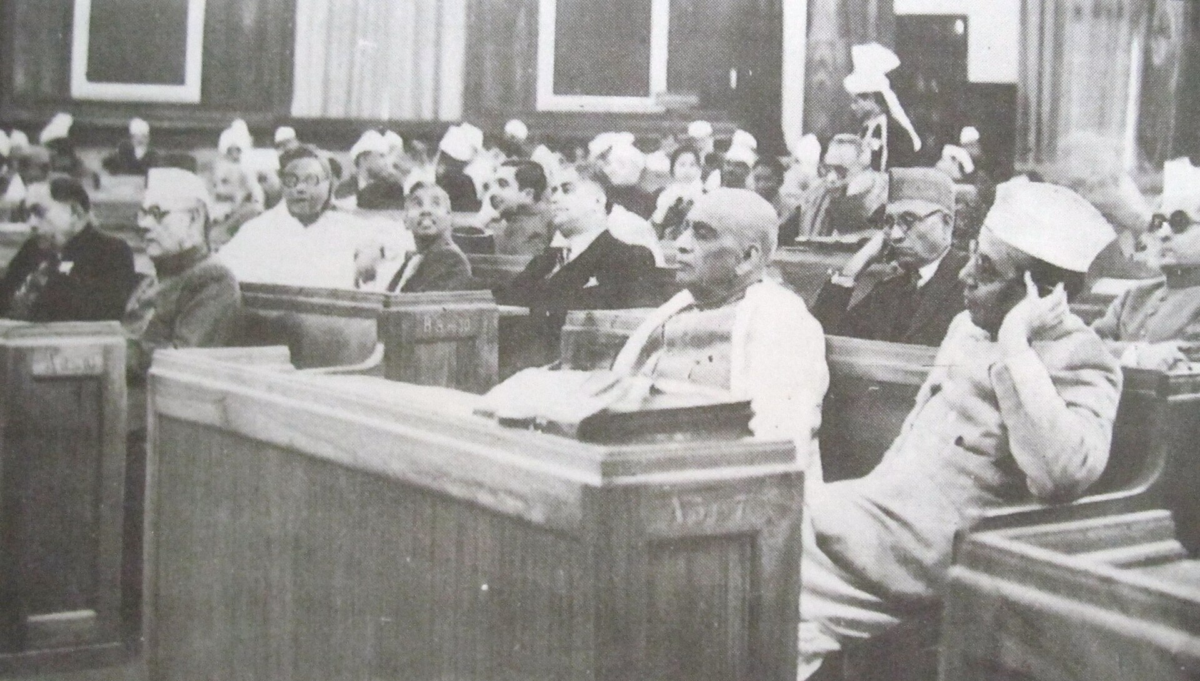
The elected members of the various Provincial assemblies voted for nominees of the Congress to the Constituent Assembly. The Constituent Assembly (224 seats) that came into being, though dominated by the Congress, also included smaller outfits such as the communists, socialists and others. The Congress ensured the election of Dr B.R. Ambedkar from a seat in Bombay and subsequently elected him chairman of the drafting committee. Apart from electing its own stalwarts to the Assembly, the Congress leadership made it a point to send leading constitutional lawyers.
This was to make a constitution that contained the idealism that marked the freedom struggle and the meaning of swaraj, as specified in the Fundamental Rights Resolution passed by the Indian National Congress at its Karachi session (March 1931). This, indeed, laid the basis for the making of our constitution, a document conveying an article of faith guaranteeing to the citizens a set of fundamental rights as much as a set of directive principles of state policy. The constitution also committed the nation to the principle of universal adult franchise and an autonomous election commission. The constitution also underscored the independence of the judiciary as much as it laid down sovereign law-making powers with the representatives of the people.
The members of the constituent assembly were not averse to learn and picking up features from the constitutions from all over the world, and at the same time, they were clear that the exercise was not about copying provisions from the various constitutions from across the world.
Jawaharlal Nehru set the ball rolling on December 13, 1946, by placing the Objectives Resolution before the Constituent Assembly. The assembly was convened for the first time on December 9, 1946. Rajendra Prasad was elected chairman of the House.
The Objectives Resolution is indeed the most concise introduction to the spirit and the contents of the Constitution of India. The importance of this resolution can be understood if we see the Preamble to the Constitution and the Fundamental Rights and Directive Principles of State Policy enshrined in it, and as adopted on November 26, 1949.
The Constitution of India, thus, marked a new beginning and yet established continuity with India’s past. The Fundamental Rights drew everything from clause 5 of the Objectives Resolution as well as from the rights enlisted by the Indian National Congress at its Karachi session . The spirit of the Constitution was drawn from the experience of the struggle for freedom and the legal language from the Objectives Resolution and, most importantly, from the Universal Declaration of Human Rights (UDHR), promulgated by the United Nations on December 10, 1948.
Merger of Princely States
The adoption of the Constitution on November 26, 1949, was only the beginning of a bold new experiment by the infant nation. There were a host of other challenges that the nation and its leaders faced, and they had to be addressed
even while the Constituent Assembly met and started its job of drafting independent India’s constitution. Among them was the integration of the Indian States or the Princely States.
The task of integrating the Princely States into the Indian Union was achieved with such speed that by August 15, 1947, except for Kashmir, Junagadh and Hyderabad, all had agreed to sign an Instrument of Accession with India, acknowledging its central authority over Defence, External Affairs and Communications.
The task of integrating these states, with one or the other Provinces of the Indian Union, was accomplished with ease. The resolution passed at the All India States People’s Conference (December 1945 and April 1947) that states refusing to join the Constituent Assembly would be treated as hostile was enough to get the rulers to sign the Instrument of Accession in most cases. There was the offer of a generous privy purse to the princes. The rapid unification of India was ably handled and achieved by Sardar Vallabhai Patel, who, as Home Minister in the Interim Cabinet, was also entrusted with the States Ministry for this purpose. The People’s Movements exerted pressure on the princes to accede to the Indian union.
The long, militant struggle that went on in the Travancore State for Responsible Government culminating in the Punnapra–Vayalar armed struggle against the Diwan, Sir C.P. Ramaswamy, the Praja Mandal as well as some tribal agitations that took place in the Orissa region – Nilagiri, Dhenkanal and Talcher – and the movement against the Maharaja of Mysore conducted by the Indian National Congress all played a major role in the integration of Princely States.
Yet, there was the problem posed by the recalcitrant ruler of Hyderabad, with the Nizam declaring his kingdom as independent. The ruler of Junagadh wanted to join Pakistan, much
against the wishes of the people. Similarly, the Hindu ruler of Kashmir, Maharaja Hari Singh, declared that Kashmir would remain independent while the people of the state, under the leadership of the National Conference, had waged a “Quit Kashmir” agitation against the Maharaja. It must be stressed here that the movement in Kashmi,r as well as the other Princely States were also against the decadent practice of feudal land and social relations that prevailed there.
“The police action” executed in Hyderabad within 48 hours after the Nizam declared his intentions demonstrated that India meant business. It was the popular anger against the Nizam and his militia, known as the Razakkars, that was manifest in the Telengana people’s movement led by the communists there, which provided the legitimacy to “the police action”.
Though Patel had been negotiating with the Maharaja of Kashmir since 1946, Hari Singh was opposed to accession. However, in a few months after independence, in October 1947, marauders from Pakistan raided Kashmir, and there was no way that Maharaja Hari Singh could resist this attack on his own. Before India went to his rescu,e the Instrument of Accession was signed by him at the instance of Patel. Thus, Kashmir too became an integral part of the Indian Union.
This process and the commitment of the leaders of independent India to the concerns of the people of Kashmir led the Constituent Assembly to provide for autonomous status to the State of Jammu and Kashmir under Article 370 of the Constitution.
Linguistic Reorganisation of States
An important aspect of the making of independent India was the reorganisation of states on a linguistic basis. The colonial rulers had rendered the sub-continent into administrative units, dividing the land by way of Presidencies or Provinces without taking into account the language and its impact on culture on a region. Independence and the idea of a constitutional democracy meant that the people were sovereign and that India was a multi-cultural nation where federal principles were to be adopted in a holistic sense and not just as an administrative strategy.
The linguistic reorganisation of states was raised and argued out in the Constituent Assembly between 1947 and 1949. The assembly, however, decided to hold it in abeyance for a while. This was on the grounds that the task was huge and could create problems in the aftermath of the partition and the accompanying violence.
After the Constitution came into force, it began to be implemented in stages, beginning with the formation of a composite Andhra Pradesh in 1956. It culminated in the trifurcation of Punjab to constitute a Punjabi-speaking state of Punjab and carving out Haryana and Himachal Pradesh from the existing state of Punjab in 1966.
The idea of linguistic reorganisation of states was integral to the national movement, at least since 1920. The Indian National Congress, at its Nagpur session (1920), recorded that the national identity would have to be necessarily achieved through linguistic identity and resolved to set up the Provincial Congress Committees on a linguistic basis.
It took concrete expression in the Nehru Committee Report of 1928. Section 86 of the Nehru Report read: “The redistribution of provinces should take place on a linguistic basis on the demand of the majority of the population of the area concerned, subject to financial and administrative considerations.”
This idea was expressed, in categorical terms, in the manifesto of the Indian National Congress for the elections to the Central and Provincial Legislative Assemblies in 1945. The manifesto made a clear reference to the reorganisation of the provinces: “… it (the Congress) has also stood for the freedom of each group and territorial area within the nation to develop its own life and culture within the larger framework, and it has stated that for this purpose such territorial areas or provinces should be constituted as far as possible, on a linguistic and cultural basis…”
On August 31, 1946, only a month after the elections to the Constituent Assembly, Pattabhi Sitaramayya raised the demand for an Andhra Province: “The whole problem”, he wrote, “must be taken up as the first and foremost problem to be solved by the Constituent Assembly”. He also presided over a conference on December 8, 1946, that passed a resolution demanding that the Constituent Assembly accept the principle for linguistic reorganisation of States. The Government of India, in a communique ,stated that Andhra could be mentioned as a separate unit in the new Constitution as was done inthe case of Sind and Orissa under the Government of India Act, 1935.
The Drafting Committee of the Constituent Assembly, however, found that such a mention of Andhra was not possible until the geographical schedule of the province was outlined. Hence, on June 17, 1948, Chairman Rajendra Prasad set up a 3-member commission, called The Linguistic Provinces Commission, with a specific brief to examine and report on the formation of
new provinces of Andhra, Kerala, Karnataka and Maharashtra. Its report, submitted on December 10, 1948, listed out reasons against the idea of linguistic reorganisation in the given context. It dealt with each of the four proposed States – Andhra, Karnataka, Kerala and Maharashtra – and concluded against such an idea.
However, the demand for linguistic reorganisation of states did not stop. The issue gained centre-stage with Pattabhi Sitaramayya’s election as the Congress President at the Jaipur session. A resolution there led to the constitution of a committee with Sardar Vallabhai Patel, Pattabhi Sitaramayya and Jawaharlal Nehru (also called the JVP committee).
The JVP committee submitted its report on April 1, 1949. It also held that the demand for linguistic states, in the given context, as “narrow provincialism’’ and that it could become a “menace’’ to the development of the country. The JVP committee also held out that “while language is a binding force, it is also a separating one’’. However, it stressed that it was possible that “when conditions are more static and the state of peoples’ minds calmer, the adjustment of these boundaries or the creation of new provinces can be undertaken with relative ease and with advantage to all concerned.’’
The committee said in conclusion that it was not the right time to embark upon the idea of linguistic reorganisation of States. In other words, the consensus was that the linguistic reorganisation of states should be postponed. There was provision for reworking the boundaries between states and also for the formation of new states from parts of existing states.
The makers of the Constitution did not qualify the reorganisation of the States as only on a linguistic basis but left it open as long as there was agreement on such reorganisation.
The idea of linguistic states revived soon after the first general elections were over. Potti Sriramulu’s fast demanding a separate state of Andhra, beginning October 19, 1952 and his death thereafter on December 15, 1952.
This led to the constitution of the States Reorganisation Commission, with Fazli Ali as Chairperson, and K.M. Panikkar and H.N. Kunzru as members. The Commission submitted its report in October 1955. The Commission recommended the following States to constitute the Indian Union: Madras, Kerala, Karnataka, Hyderabad, Andhra, Bombay, Vidharbha, Madhya Pradesh, Rajasthan, Punjab, Uttar Pradesh, Bihar, West Bengal, Assam, Orissa and Jammu & Kashmir. In other words, the Commission’s recommendations were a compromise between administrative convenience and linguistic concerns.
The Nehru regime, however, was, by then, committed to the principle of linguistic reorganisation of the States and thus went ahead implementing the States Reorganisation Act, 1956. Andhra Pradesh, including the Hyderabad State, came into existence. Kerala,
including the Travancore-Cochin State and the Malabar district of Madras, came into existence. Karnataka came into being, including the Mysore State and also parts of Bombay and Madras States. In all these cases, the core principle was linguistic identity.
In May 1960, Gujarat was created from Maharashtra to fulfil the demand of the Gujarati-speaking people. Subsequently, the demand for a Punjabi subha continued to be described by the establishment as separatist until 1966. The trifurcation of Punjab brought to an end the process that was initiated by the Indian National Congress in 1920 to put language as the basis for the reorganisation of the provinces.
India’s Foreign Policy
The founding principles of independent India’s foreign policy were, in fact, formulated at least three decades before independence. It evolved in the course of the freedom struggle and was rooted in its conviction against any form of colonialism. Jawaharlal Nehru was its prime architect.
India’s foreign policy was based on certain basic principles. They are: anti-colonialism, anti-imperialism, anti-apartheid or anti-racism, non-alignment with the superpowers, Afro- Asian Unity, non-aggression, non-interference in others’ internal affairs, mutual respect for each other’s sovereignty and territorial integrity, and the promotion of world peace and security. The commitment to peace between nations was not placed in a vacuum; it was placed with an equally emphatic commitment to justice.
The context in which India’s foreign policy was formulated was further complicated by the two contesting power blocs that dominated the world in the post-war scenario: the US and the USSR. Independent India responded to this with non-alignment as its foreign policy doctrine.
Before we go into the details of non-alignment, it will be useful to look at India’s relationship with China since independence. China was liberated by its people from Japanese colonial expansionism in 1949, just two years
after India’s Independence. Nehru placed a lot of importance on friendship with China, with whom India shared a long border.
India was the first to recognise the new People’s Republic of China on January 1, 1950. The shared experience of suffering at the hands of colonial powers and its consequences –poverty and underdevelopment – in Nehru’s perception was force enough to get the two nations to join hands to give Asia its due place in the world. Nehru pressed for representation for Communist China in the UN Security Council. However, when China occupied Tibet in 1950, India was unhappy that it had not been taken into confidence. In 1954, India and China signed a treaty in which India recognised China’s rights over Tibet and the two countries placed their relationship within a set of principles, widely known since then as the principles of Panch Sheel.
Meanwhile, Nehru took special efforts to project China and Chou En-lai at the Bandung Conference, held in April 1955. In 1959, the Dalai Lama fled Tibet along with thousands of refugees after a revolt by the Buddhists was crushed by the Chinese government. The Dalai Lama was given asylum in India, and it made the Chinese unhappy. Soon after, in October 1959, the Chinese opened fire on an Indian patrol near the Kongka pass in Ladakh, killing five Indian policemen and capturing a dozen others. Though talks were held at various levels, including with Chou En-lai, not much headway was made.
Then came the 1962 war with China. On 8 September 1962, Chinese forces attacked the Thagla ridge and dislodged Indian troops. All the goodwill and attempts to forge an Asian bloc in the world came to a stop. India took a long time to recover from the blow to its self-respect, and perhaps it was only the victory over Pakistan in the Bangladesh war, in which China and the US were also supporting Pakistan, that restored the sense of self-worth.
India’s contribution to the world, however, was not restricted to its relationship with China and the Panch Sheel. It was most pronounced and lasting in the form of non-alignment and its concretisation at the Bandung Conference.
In March 1947, Nehru organised the Asian Relations Conference, attended by more than twenty countries. The theme of the conference was Asian independence and assertion on the world stage. Another such conference was held in December 1948 in response to the Dutch attempt to recolonise Indonesia. The decolonisation initiative was carried forward further at the Asian leaders’ conference in Colombo in 1954, culminating in the Afro- Asian Conference in Bandung, Indonesia,
in 1955. The Bandung Conference set the stage for the meeting of nations at Belgrade and the birth of the Non-Aligned Movement.
The architect of independent India’s foreign policy, indeed, was Jawaharlal Nehru and the high point of it was reached in 1961 when he stood with Nasser of Egypt and Tito of Yugoslavia to call for nuclear disarmament and peace. The importance of non-alignment and its essence in such a world is best explained by what Nehru had to say about it.
“So far as all these evil forces of fascism, colonialism and racialism or the nuclear bomb and aggression and suppression are concerned, we stand most emphatically and unequivocally committed against them . . . We are unaligned only in relation to the Cold War with its military pacts. We object to all this business of forcing the new nations of Asia and Africa into their cold war machine. Otherwise, we are free to condemn any development which we consider wrong or harmful to the world or ourselves, and we use that freedom every time the occasion arises.”
-
Important keywords mughal empire for upsc
1. Mughal Rulers & Dynastic Timeline
- Babur (1526–1530)
- First Battle of Panipat (1526) vs. Ibrahim Lodi
- Battle of Khanwa (1527) vs. Rana Sanga
- Tuzuk-i-Baburi (Baburnama) – Autobiography (Chagatai Turkish)
- Humayun (1530–1540, 1555–1556)
- Defeated by Sher Shah Suri (1540)
- Exile & return (1555) with Persian help
- Din Panah (Delhi fort)
- Akbar (1556–1605)
- Second Battle of Panipat (1556) vs. Hemu
- Mansabdari System (Rank-based bureaucracy)
- Din-i-Ilahi (Syncretic religion)
- Sulh-i-Kul (Universal peace policy)
- Navratnas (Birbal, Tansen, etc.)
- Jahangir (1605–1627)
- Nur Jahan (Influential queen)
- Mughal-Sikh conflicts (Guru Arjan Dev’s execution)
- Tuzuk-i-Jahangiri (Autobiography)
- Shah Jahan (1628–1658)
- Taj Mahal (Built for Mumtaz Mahal)
- Red Fort (Delhi), Jama Masjid
- Peak of Mughal architecture
- Aurangzeb (1658–1707)
- Alamgir (Title)
- Reimposed Jizya tax (1679)
- Annexed Deccan (Golconda, Bijapur)
- Conflict with Shivaji & Sikhs
- Later Mughals (1707–1857)
- Bahadur Shah I (1707–1712)
- Farrukhsiyar (1713–1719) – Signed 1717 Firman (British trade rights)
- Muhammad Shah (1719–1748) – Nadir Shah’s invasion (1739)
- Shah Alam II (1759–1806) – Battle of Buxar (1764)
- Bahadur Shah Zafar II (Last Mughal, 1857 Revolt)
2. Administration & Governance
- Centralized Monarchy
- Mansabdari System (Rank & salary system)
- Zabt (Land Revenue) – Todar Mal’s Dahsala System
- Jagirdari System (Land grants to nobles)
- Subahs, Sarkars, Parganas (Administrative divisions)
- Diwan, Mir Bakshi, Sadr-us-Sudur (Key officials)
Check the complete list of Administration and Governance.
3. Economy & Society
- Agriculture – Cash crops (cotton, indigo)
- Trade – Surat, Hooghly, Masulipatnam ports
- European Companies – EIC, Dutch, Portuguese
- Coinage – Gold Mohur, Silver Rupiya, Copper Dam
- Zamindars (Landlords)
- Sati, Child Marriage, Purdah (Social issues)
Complete list of important keywords for Economy and Society during the Mughals
4. Art, Architecture & Culture
Architecture
- Indo-Islamic/Persian style
- Fatehpur Sikri (Buland Darwaza, Panch Mahal)
- Red Fort (Delhi), Agra Fort
- Shalimar Gardens (Lahore)
- Moti Masjid (Agra), Jama Masjid (Delhi)
Paintings & Literature
- Mughal Miniature Paintings (Persian influence)
- Akbar’s Razmnama (Mahabharata translation)
- Jahangir’s patronage (Ustad Mansur – naturalist paintings)
- Persian as court language
Music & Science
- Tansen (Akbar’s court)
- Ain-i-Akbari (Abul Fazl) – Detailed Mughal administration
5. Religion & Policies
- Akbar’s Religious Tolerance
- Ibadat Khana (Debates)
- Abolished Jizya & Pilgrim Tax
- Aurangzeb’s Orthodox Policies
- Ban on music, art
- Temple destruction (Kashi Vishwanath, Mathura)
Check the complete list for the Religions and Policies of the Mughal
6. Foreign Travellers & Sources
- Bernier (French criticised the Mughal economy)
- Tavernier (French, described trade)
- Manucci (Italian, detailed Aurangzeb’s reign)
- Ain-i-Akbari & Akbarnama (Abul Fazl)
7. Decline of Mughals
- Causes:
- Aurangzeb’s Deccan wars (Financial drain)
- Jagirdari Crisis (Noble Revolts)
- Rise of Marathas, Sikhs, British
- Key Events:
- Nadir Shah’s invasion (1739) – Peacock Throne looted
- Battle of Plassey (1757) – EIC’s rise
- 1857 Revolt – End of Mughal rule
- Babur (1526–1530)
-
Tnpsc Group 1 syllabus 2025 pdf download
The Tamil Nadu Public Service Commission (TNPSC) Group 1 Examination is one of the most sought-after competitive exams in Tamil Nadu, aimed at recruiting candidates for high-ranking administrative positions in the state government. These roles include Deputy Collector, Deputy Superintendent of Police, Assistant Commissioner, and other pivotal posts in various government departments.
Selection Process
The TNPSC Group 1 Exam follows a three-stage selection process:
- Preliminary Exam:
- Objective-type questions are designed to test general knowledge and aptitude.
- Comprises 200 questions worth 300 marks.
- Qualifying in nature, with no negative marking.
- Main Examination:
- Descriptive papers covering General Studies across three levels.
- Includes a Tamil Eligibility Test and General Studies Papers I, II, and III.
- Total marks: 850.
- Interview:
- Candidates who clear the Mains are called for an interview worth 100 marks.
- Final merit is based on combined scores from the Mains and Interviews.
Exam Pattern
Preliminary Exam
- Duration: 3 hours.
- Subjects: General Studies (175 questions) and Aptitude & Mental Ability (25 questions).
Main Examination
- Duration: 3 hours per paper.
- Papers:
- Tamil Eligibility Test (100 marks).
- General Studies Papers I, II, III (250 marks each).
Key Dates for TNPSC Group 1 Recruitment 2025
- Notification Release: April 1, 2025.
- Last Date to Apply: April 30, 2025.
- Preliminary Exam: June 15, 2025.
Preparation Tips
To excel in the TNPSC Group 1 exam:
- Understand the syllabus thoroughly for both Prelims and Mains.
- Focus on Indian Polity, Economy, History, Geography, and Current Affairs.
- Practice mock tests and previous year’s papers to improve speed and accuracy.
Why Choose TNPSC Group 1?
Clearing this exam opens doors to prestigious roles that offer not only financial stability but also the opportunity to contribute significantly to governance and public service delivery in Tamil Nadu. With structured preparation and dedication, aspirants can achieve their dream of serving in these esteemed positions.
Tnpsc Group 1 syllabus 2025 Preliminary Examination
Unit I: General Science (10 Questions)
Scientific knowledge and scientific temper – Power of reasoning – Rote learning vs conceptual learning – Science as a tool to understand the past, present, and future; Nature of universe – General scientific laws – Mechanics – Properties of matter, force, motion, and energy – Everyday application of the basic principles of mechanics, electricity and magnetism, light, sound, heat, nuclear physics, laser, electronics, and communications; Elements and compounds, acids, bases, salts, petroleum products, fertilizers, pesticides; Main concepts of life science, classification of living organisms, evolution, genetics, physiology, nutrition, health and hygiene, human diseases; Environment and ecology; Latest inventions in science and technology; Current affairs.
Unit II: Geography of India (10 Questions)
Location – Physical features – Monsoon, rainfall, weather and climate – Water resources – Rivers in India – Soil, Minerals and Natural Resources – Forest and Wildlife – Agricultural pattern; Transport – Communication; Social Geography – Population density and distribution – Racial, linguistic groups and major tribes; Natural calamity – Disaster management – Environmental pollution – Reasons and preventive measures – Climate change – Green energy; Geographical landmarks; Current affairs.
Unit III: History, Culture of India, and Indian National Movement (25 Questions)
Indus Valley Civilization – Guptas, Delhi Sultans, Mughals, and Marathas – Age of Vijayanagaram and Bahmani Kingdoms – South Indian History; Change and continuity in the socio-cultural history of India; National Renaissance – Early uprising against British rule – Indian National Congress – Emergence of leaders – B.R.Ambedkar, Bhagat Singh, Bharathiar, V.O.Chidambaranar, Jawaharlal Nehru, Kamarajar, Mahatma Gandhi, Maulana Abul Kalam Azad, Thanthai Periyar, Rajaji, Subash Chandra Bose, Rabindranath Tagore, and others; Different modes of agitation: Growth of Satyagraha and Militant Movements; Communalism and Partition; Characteristics of Indian Culture, Unity in Diversity – Race, Language, Custom; India as a Secular State, Social Harmony; Prominent personalities in various spheres – Arts, Science, Literature and Philosophy; National symbols – Eminent personalities and places in news – Sports – Books and Authors; Current affairs.
Unit IV: Indian Polity (40 Questions)
Constitution of India – Preamble to the Constitution – Salient features of the Constitution – Union, State and Union Territory – Citizenship, Fundamental Rights, Fundamental Duties, Directive Principles of State Policy – Union Executive, Union Legislature – State Executive, State Legislature – Local Governments, Panchayat Raj – Spirit of federalism: Centre – State relationships – Election – Judiciary in India – Rule of Law – Corruption in public life – Anti-corruption measures – Lokpal and Lok Ayukta – Right to Information – Empowerment of Women – Consumer Protection Forums, Human Rights Charter; Political parties and political system in India; Current affairs.
Unit V: Indian Economy and Development Administration in Tamil Nadu (50 Questions)
Nature of Indian Economy – Five-year plan models – an assessment – Planning Commission and Niti Aayog; Sources of revenue – Reserve Bank of India – Fiscal Policy and Monetary Policy – Finance Commission – Resource sharing between Union and State Governments – Goods and Services Tax; Structure of Indian economy and employment generation, Land Reforms and Agriculture – Application of Science and Technology in Agriculture – Industrial growth – Rural welfare oriented programmes – Social problems – Population, Education, Health, Employment, Poverty; Human Development Indicators in Tamil Nadu and a comparative assessment across the Country – Impact of social reform movements in the socio-economic development of Tamil Nadu – Political parties and welfare schemes for various sections of people – Rationale behind the reservation policy, and access to the social resources – Economic trends in Tamil Nadu – Role and impact of social welfare schemes in the socio-economic development of Tamil Nadu – Social justice and social harmony as the cornerstones of socio-economic development; Education and health systems in Tamil Nadu; Geography of Tamil Nadu and its impact on economic growth; Achievements of Tamil Nadu in various fields; e-Governance in Tamil Nadu; Public awareness and General administration – Welfare oriented Government schemes and their utility, Problems in public delivery systems; Current socio-economic issues; Current affairs.
Unit VI: History, Culture, Heritage, and Socio-Political Movements in Tamil Nadu (40 Questions)
History of Tamil Society, related archaeological discoveries, Tamil literature from Sangam age till contemporary times; Thirukkural – Significance as a secular literature – Relevance to everyday life, Impact of Thirukkural on humanity, Thirukkural and universal values – Relevance to Socio-politico-economic affairs, Philosophical content in Thirukkural; Role of Tamil Nadu in freedom struggle – Early agitations against British Rule – Role of women in freedom struggle; Evolution of 19th and 20th century socio-political movements in Tamil Nadu – Justice Party, Growth of Rationalism – Self Respect Movement, Dravidian Movement, and principles underlying both these movements; Contributions of Thanthai Periyar and Perarignar Anna.
Part B: Aptitude and Mental Ability (SSLC Standard – 25 Questions)
Unit I: Aptitude (15 Questions)
Simplification – Percentage – Highest Common Factor (HCF) – Lowest Common Multiple (LCM) – Ratio and Proportion – Simple interest – Compound interest – Area – Volume – Time and Work.
Unit II: Reasoning (10 Questions)
Logical reasoning – Puzzles – Dice – Visual reasoning – Alpha numeric reasoning – Number series.
Tnpsc Group 1 syllabus 2025 pdf download
-
Top 10 UPSC Books for Beginners: A Comprehensive Guide
The UPSC Civil Services Examination is a challenging but rewarding endeavor. For aspiring civil servants, the journey begins with a solid foundation built upon the right resources. Choosing the right books is crucial for beginners to grasp the vast UPSC syllabus effectively. This blog post presents a curated list of 10 essential books to kickstart your UPSC preparation:
1.Indian Polity by M. Laxmikanth
This is arguably the single most important book for UPSC. Laxmikanth’s lucid explanations and comprehensive coverage of Indian Constitution, political system, and government institutions make it indispensable. It delves into the intricacies of the Indian Constitution, analyzing its historical context, fundamental rights and duties, directive principles of state policy, and the structure and functions of the Indian government.
The book also covers important constitutional amendments, judicial interpretations, and contemporary political issues. Its clarity and depth make it an invaluable resource for understanding the Indian political system.
2.NCERT Textbooks (Class 6-12)
NCERT textbooks are the foundation of UPSC preparation, providing a comprehensive and in-depth understanding of various subjects. They are written in a clear and concise manner, making them easy to understand. NCERT textbooks cover a wide range of topics, from history and geography to economics and science. They are also updated regularly to reflect the latest developments in these fields.
Here are some of the key reasons why NCERT textbooks are so important for UPSC preparation:
Comprehensive coverage
NCERT textbooks cover all the important topics that are likely to be asked in the UPSC exam.
Clear and concise writing
The language used in NCERT textbooks is simple and easy to understand.
Updated content
NCERT textbooks are regularly updated to reflect the latest developments in the field of education.
Affordable
NCERT textbooks are relatively inexpensive, making them accessible to all students.
In addition to the core subjects, NCERT textbooks also cover important topics like Indian culture, society, and environment. These topics are essential for understanding the Indian context and are often asked in the UPSC exam.
3.Spectrum’s Modern Indian History by Rajiv Ahir
This book offers a concise and engaging narrative of modern India, covering key events, personalities, movements, and social and economic changes. It delves into the colonial period, the Indian National Movement, and the post-independence era, providing a comprehensive overview of India’s journey from a colonial past to a modern nation.
4.Geography of India by Majid Husain
This book provides a comprehensive overview of Indian geography, including physical, social, economic, and environmental aspects. It delves into the intricate details of India’s diverse landscapes, climate, natural resources, and human geography. The book also covers important topics like regional planning, environmental issues, and sustainable development. Majid Husain’s lucid writing style and in-depth analysis make it an invaluable resource for understanding the complexities of Indian geography.
5.Indian Economy by Ramesh Singh
This book offers a comprehensive and in-depth analysis of the Indian economy, covering a wide range of topics such as economic growth, development, planning, poverty, unemployment, agriculture, industry, infrastructure, foreign trade, and fiscal and monetary policies. It also discusses the impact of globalization and liberalization on the Indian economy. The book is well-written and easy to understand, making it a valuable resource for UPSC aspirants.
6.The Hindu Newspaper
Reading The Hindu daily is crucial for staying updated on current affairs, developing analytical skills, and improving your English. It provides comprehensive coverage of important national and international issues, including politics, economics, society, and culture. The newspaper’s editorials offer in-depth analysis of current events, helping you develop a nuanced understanding of complex issues. Additionally, reading The Hindu can significantly improve your vocabulary and writing skills, which are essential for success in the UPSC exam.
7.Ethics, Integrity, and Aptitude for Civil Services Examination by Subba Rao
This book provides valuable insights into ethical dilemmas, case studies, and the importance of integrity in public service. It delves into the nuances of ethical decision-making, explores the challenges faced by civil servants in upholding ethical standards, and provides practical guidance on how to navigate complex ethical situations.
8.Yojana and Kurukshetra Magazines
These government publications offer in-depth articles on various social, economic, and cultural issues, enriching your understanding of contemporary India. They cover a wide range of topics, from education and healthcare to agriculture and environment. These magazines are a valuable resource for UPSC aspirants as they provide insights into government policies, schemes, and initiatives.
9.Objective General English by S.P. Bakshi
This book provides a comprehensive and engaging approach to mastering English grammar, vocabulary, and comprehension. It covers a wide range of topics, from basic grammar rules to advanced vocabulary building techniques. The book is packed with numerous practice exercises and tips to help you improve your language skills.
10.NCERT Geography for Class 11 (Fundamentals of Physical Geography) and Class 12 (India: People and Economy)
These books provide a deeper understanding of physical geography and the Indian economy, respectively. They delve into the intricacies of landforms, climate, natural resources, and human geography, as well as economic growth, development, planning, poverty, unemployment, agriculture, industry, infrastructure, foreign trade, and fiscal and monetary policies.
Conclusion
This curated list of top 10 books provides a strong foundation for your studies, covering key subjects and offering clear explanations. Remember that consistent effort, regular revision, and a well-structured study plan are equally crucial.
-
A Tapestry of Traditions: Exploring the Cultural Landscape of Arunachal Pradesh
Nestled in the northeastern corner of India, Arunachal Pradesh unveils a cultural tapestry as rich and diverse as its breathtaking landscapes. Beyond the majestic peaks and verdant valleys lies a world where traditions are woven into the very fabric of life. Join us on a journey as we explore the vibrant cultural landscape of Arunachal Pradesh, where every dance, every festival, and every ritual tells a story of heritage and resilience.
Diverse Ethnic Mosaic
Arunachal Pradesh, often referred to as the “Land of the Dawn-Lit Mountains,” is a state in northeastern India known for its rich cultural diversity. The state is home to multiple tribes, each with its distinct language, customs, rituals, and traditional practices. Let’s explore some of the prominent tribes and their unique cultures in Arunachal Pradesh.
Nyishi Tribe: The Nyishi tribe is one of the largest tribes in Arunachal Pradesh. Known for their vibrant festivals, the Nyishis celebrate Nyokum, a festival dedicated to the goddess of prosperity and welfare. Traditional dances, rituals, and community feasts are integral parts of their cultural expressions.
Adi Tribe: The Adi tribe is one of the most populous tribes in Arunachal Pradesh. Adi culture is characterized by festivals like Solung and Aran, which celebrate the agricultural cycle. They are skilled in cane and bamboo crafts, and their traditional dances often depict their connection to nature.
Apatani Tribe: Primarily inhabiting the Ziro Valley, the Apatani tribe is known for its distinctive cultural practices. Apatani women are recognized for their facial tattoos and nose plugs, a unique cultural tradition. The Myoko festival is a major celebration involving rituals, dances, and feasting.
Galos Tribe:Population: The Galo tribe is one of the major tribes in the West Siang district.The Mopin festival, dedicated to the goddess of prosperity, is a significant cultural event for the Galos. Traditional dances, rituals, and indigenous games are important aspects of their cultural heritage.
Monpa Tribe: Predominantly found in the Tawang district. Monpas follow Tibetan Buddhism, and Tawang Monastery, one of the largest monasteries in India, is a sacred site for them. Losar, the Tibetan New Year, is celebrated with religious fervor, traditional dances, and music.
Sherdukpen Tribe: Inhabiting the Tawang and West Kameng districts. The Sherdukpen tribe has a rich oral tradition, and their festivals like Sollung and Losar reflect their agrarian and religious practices. Traditional dances, including the Aji Lamu dance, are an integral part of their cultural heritage.
Khampti Tribe: Population: Primarily found in the Lohit district. The Khampti tribe follows Theravada Buddhism, and their festivals like Poi Pee Mau are celebrated with religious rituals, cultural performances, and traditional games. They are also known for their expertise in traditional crafts.
Mishing Tribe: Found in the Upper Siang and East Siang districts. The Mishing tribe is known for its colorful festivals, such as Ali-Aye Ligang and Porag, which celebrate agricultural cycles. Their traditional dance forms and handloom weaving are integral to their cultural identity.
Wancho Tribe: Inhabiting the Longding district. The Wancho tribe is known for their unique customs and festivals, including Oriah, which marks the end of the sowing season. Traditional dances and rituals are an essential part of their cultural expressions.
Nocte Tribe: Primarily found in the Tirap district. The Nocte tribe is known for their traditional system of governance and their vibrant festivals like Ojiyale. Traditional art forms, including handwoven textiles, are integral to their cultural practices.
These are just a few examples of the diverse tribes that contribute to the cultural mosaic of Arunachal Pradesh.
Festivals: Celebrations of Life
-
Welfare oriented Government Schemes and their utility Tnpsc
The Indian government has implemented numerous welfare-oriented schemes aimed at improving the quality of life for its citizens, particularly for marginalized and underprivileged sections of society. These schemes span various sectors, including health, education, employment, and social security. Here’s an overview of some significant welfare schemes and their utility.
1. Mahatma Gandhi National Rural Employment Guarantee Act (MGNREGA)
MGNREGA provides a legal guarantee for at least 100 days of unskilled wage employment in a financial year to every rural household. This scheme aims to enhance livelihood security in rural areas, reduce poverty, and empower women by providing them with employment opportunities.
2. Pradhan Mantri Awas Yojana (PMAY)
PMAY aims to provide affordable housing to the urban poor and promote the construction of houses in rural areas. The scheme provides financial assistance to eligible beneficiaries for building or renovating their homes, thereby ensuring shelter for all.
3. Ayushman Bharat Yojana
This health insurance scheme provides coverage of up to ₹5 lakh per family per year for secondary and tertiary hospitalization. It aims to ensure access to quality healthcare services for economically vulnerable sections of society, significantly reducing out-of-pocket expenditures on health.
4. Pradhan Mantri Kisan Samman Nidhi (PM-KISAN)
Under this scheme, eligible farmers receive direct income support of ₹6,000 per year in three equal installments. This initiative helps alleviate financial stress among farmers and promotes agricultural sustainability.
5. National Social Assistance Programme (NSAP)
NSAP provides social assistance to the elderly, widows, and persons with disabilities through various schemes like the Indira Gandhi National Old Age Pension Scheme. It aims to provide a safety net for the most vulnerable populations by ensuring them a minimum level of financial support.
6. Deen Dayal Upadhyaya Grameen Kaushalya Yojana (DDU-GKY)
This skill development initiative focuses on enhancing the employability of rural youth by providing them with relevant skills and training. The program aims to promote self-employment and entrepreneurship among rural populations.
7. Pradhan Mantri Gram Sadak Yojana (PMGSY)
PMGSY aims to provide all-weather road connectivity to unconnected villages across India. Improved infrastructure facilitates better access to markets, education, and healthcare services, thereby enhancing overall rural development.
8. Aajeevika – National Rural Livelihoods Mission (NRLM)
NRLM focuses on promoting self-employment and organization of rural poor into self-help groups (SHGs). By providing skill training and financial assistance, this mission empowers women and helps improve their socio-economic status.
9. Skill India Mission
Launched to enhance the employability of youth by providing skill development training across various sectors. This mission addresses the skill gap in the workforce and promotes entrepreneurship among young individuals.
10. Atal Pension Yojana
This pension scheme aims to provide financial security to workers in the unorganized sector after retirement. By encouraging regular savings during their working years, it ensures a stable income post-retirement.
Welfare Scheme Utility Mahatma Gandhi National Rural Employment Guarantee Act (MGNREGA) Provides 100 days of guaranteed wage employment to rural households, enhancing livelihood security. Pradhan Mantri Awas Yojana (PMAY) Aims to provide affordable housing to the urban poor and promote housing construction in rural areas. Ayushman Bharat Yojana Offers health insurance coverage of up to ₹5 lakh per family per year for secondary and tertiary hospitalization. Pradhan Mantri Kisan Samman Nidhi (PM-KISAN) Direct income support of ₹6,000 per year to eligible farmers, alleviating financial stress. National Social Assistance Programme (NSAP) Provides financial assistance to elderly, widows, and persons with disabilities for social security. Deen Dayal Upadhyaya Grameen Kaushalya Yojana (DDU-GKY) Focuses on skill development and enhancing employability of rural youth through training programs. Pradhan Mantri Gram Sadak Yojana (PMGSY) Ensures all-weather road connectivity to unconnected villages, improving access to markets and services. Aajeevika – National Rural Livelihoods Mission (NRLM) Promotes self-employment and organizes rural poor into self-help groups for economic empowerment. Skill India Mission Enhances employability by providing skill development training across various sectors. Atal Pension Yojana Provides a pension scheme for workers in the unorganized sector, ensuring financial security post-retirement. This table summarizes key welfare-oriented Indian government schemes along with their utility, highlighting the government’s commitment to improving the socio-economic conditions of its citizens, especially those from marginalized communities.
Tamil Nadu Government Schemes and Their Utility
The Tamil Nadu government has launched numerous welfare schemes aimed at improving the living standards of its citizens, particularly focusing on marginalized groups. These initiatives are designed to provide financial assistance, enhance education, promote health, and empower women. Below is an overview of some prominent welfare-oriented schemes in Tamil Nadu and their utility.
1. Amma Two Wheeler Scheme for Working Women
This scheme provides financial assistance to working women to purchase two-wheelers, promoting mobility and independence. It aims to enhance women’s participation in the workforce by making commuting easier and more affordable.
2. Moovalur Ramamirtham Ammaiyar Education Assurance Scheme
This initiative focuses on ensuring that girls complete their education up to the 12th standard. It provides financial support for educational expenses, thereby reducing dropout rates among girls and promoting gender equality in education.
3. Tamil Nadu Unemployment Assistance Scheme
This scheme offers financial assistance to unemployed youth, helping them sustain themselves while seeking employment. It aims to reduce economic hardship and support job seekers in their transition to the workforce.
4. Chief Minister Comprehensive Health Insurance Scheme
This health insurance scheme provides coverage for secondary and tertiary medical care for economically disadvantaged families. It aims to reduce out-of-pocket healthcare expenses and improve access to quality healthcare services.
5. Tamil Nadu Marriage Assistance Scheme
Designed to assist economically disadvantaged families, this scheme provides financial aid for the marriage of daughters from poor families. It helps alleviate financial burdens associated with marriage ceremonies, promoting social welfare.
6. Tamil Nadu Magalir Urimai Thogai Scheme
This scheme provides monthly financial assistance to women heads of families, empowering them economically and ensuring financial security. It aims to enhance the socio-economic status of women in society.
7. Tamil Nadu Chief Minister Breakfast Scheme
Aimed at school children, this scheme provides nutritious breakfast to students in government schools. It addresses malnutrition and encourages regular school attendance by ensuring children have a healthy start to their day.
8. Tamil Nadu Zero Ticket Bus Travel Scheme for Women
This initiative allows women to travel free on state-run buses, promoting their mobility and access to employment opportunities, education, and healthcare services without the burden of transportation costs.
9. Tamil Nadu Pudhumai Penn Scheme
This scheme focuses on empowering young women through education and skill development. It aims to provide scholarships and vocational training, enhancing employability among young women.
10. Dr. Muthulakshmi Reddy Ninaivu Inter-Caste Marriage Assistance Scheme
This initiative encourages inter-caste marriages by providing financial assistance to couples who marry outside their caste. It aims to promote social harmony and reduce caste-based discrimination.
Scheme Name Utility Amma Two Wheeler Scheme for Working Women Provides financial assistance to working women for purchasing two-wheelers, enhancing mobility. Moovalur Ramamirtham Ammaiyar Education Assurance Scheme Ensures girls complete education up to 12th standard by providing financial support for educational expenses. Tamil Nadu Unemployment Assistance Scheme Offers financial assistance to unemployed youth, helping them sustain themselves while seeking jobs. Tamil Nadu Marriage Assistance Scheme Provides financial aid for the marriage of daughters from economically disadvantaged families. Chief Minister Comprehensive Health Insurance Scheme Offers health insurance coverage for secondary and tertiary medical care to economically weaker families. Tamil Nadu Chief Minister’s Solar Rooftop Capital Incentive Scheme Encourages the installation of solar rooftop systems by providing capital incentives. Tamil Nadu Magalir Urimai Thogai Scheme Provides monthly financial assistance to women heads of families, ensuring economic empowerment. Tamil Nadu Chief Minister Breakfast Scheme Offers nutritious breakfast to school children in government schools, addressing malnutrition. Tamil Nadu Zero Ticket Bus Travel Scheme for Women Allows women to travel free on state-run buses, promoting mobility and access to opportunities. Tamil Nadu Pudhumai Penn Scheme Focuses on empowering young women through education and skill development with scholarships and training. Tamil Nadu Unemployed Youth Employment Generation Programme Aims to generate employment opportunities for unemployed youth through skill training and placement services. Tamil Nadu New Entrepreneur cum Enterprise Development Scheme Supports new entrepreneurs with financial assistance and training to promote entrepreneurship. Tamil Nadu Kalaignar Magalir Urimai Thittam Scheme Provides financial support to women from economically weaker sections, enhancing their livelihoods. Tamil Nadu Chief Minister Fellowship Programme Offers fellowships to young professionals for working in government departments, enhancing governance. Tamil Nadu Makkaludan Mudhalvar Scheme Empowers local self-governments by providing funds for development projects in rural areas. Tamil Nadu Pongal Gift Scheme Provides financial assistance or gifts to families during the Pongal festival, promoting social welfare. Tamil Nadu Kalaignar Sports Kit Scheme Provides sports kits to school students, encouraging physical fitness and sports participation. Dr. Muthulakshmi Reddy Ninaivu Inter Caste Marriage Assistance Scheme Offers financial aid for inter-caste marriages to promote social harmony and reduce caste discrimination. E.V.R Maniammaiyar Ninaivu Marriage Assistance Scheme for Daughters of Poor Widows Provides financial support for the marriage of daughters from poor widows, alleviating financial burdens. Dr. Dharmambal Ammaiyar Ninaivu Widow Remarriage Assistance Scheme Offers financial assistance for widows who remarry, supporting their reintegration into society. Annai Therasa Ninaivu Marriage Assistance Scheme for Orphan Girls Provides marriage assistance for orphan girls, ensuring they receive support during marriage ceremonies. Moovalur Ramamirtham Ammaiyar Ninaivu Marriage Assistance Scheme Financial aid for the marriage of daughters from poor families, promoting social welfare and security. Tamil Nadu Tamizh Pudhalvan Scheme Aims to promote Tamil language and culture through various educational initiatives and scholarships. Tamil Nadu Naan Mudhalvan UPSC Mains Scholarship Programme Provides scholarships for UPSC aspirants from economically weaker sections, promoting civil service careers. Tamil Nadu Kalaignarin Kanavu Illam Scheme Aims to provide housing assistance to economically weaker sections, ensuring shelter and security. Conclusion
The welfare-oriented schemes implemented by the Indian government play a crucial role in addressing poverty, enhancing social security, and promoting inclusive growth. These initiatives not only aim to uplift marginalized communities but also contribute significantly to the overall development of the country by fostering economic stability and improving living standards. By ensuring that essential services are accessible to all citizens, these schemes help build a more equitable society.