Insight into Indian art forms, architecture, and culture
Detailed study of various art forms, including music, dance, paintings, and sculptures. This book is ideal for a holistic understanding of India’s artistic heritage.
Preparing for the UPSC exam requires a well-structured study plan, and one of the most important subjects in the General Studies paper is Art and Culture. This subject plays a crucial role in the Prelims and Mains, making it essential for aspirants to choose the right study materials.
Why Study Art and Culture for UPSC?
Art and Culture cover India’s rich heritage, including ancient, medieval, and modern art forms, architecture, dance, music, and literature. The UPSC frequently asks direct and analytical questions on this topic, making a strong understanding necessary for scoring well.
Other Top Books for Art and Culture UPSC Preparation
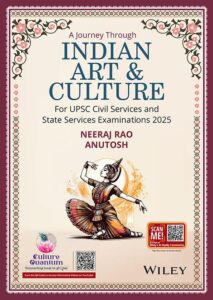
1. A Journey Through Indian Art and Culture by Neeraj Rao
This book is gaining popularity among UPSC aspirants due to its structured approach to covering Indian heritage, architecture, and cultural aspects. It is highly recommended for both beginners and advanced learners.
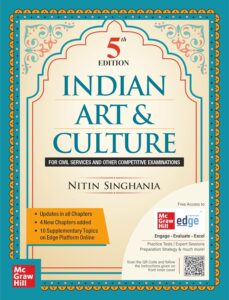
2. Indian Art and Culture by Nitin Singhania
One of the most preferred books by UPSC candidates, this book provides a comprehensive guide with detailed explanations, practice questions, and illustrations to aid retention.
3. Centre’s NCERT and CCRT Materials
NCERT books (Class 11 and 12) along with materials from the Centre for Cultural Resources and Training (CCRT) are essential for building conceptual clarity.
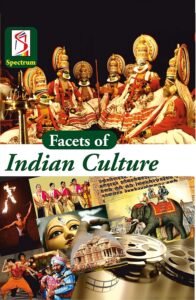
4. Facets of Indian Culture by Spectrum
This book is another useful resource that provides deep insights into various cultural aspects of India, making it helpful for both Prelims and Mains.
How to Make the Most of These Books?
Focus on Previous Year Questions: Analyze past UPSC papers to understand the trend of questions.
Make Notes: Jot down important facts and themes to revise before exams.
Use Visual Aids: Diagrams, mind maps, and infographics can enhance understanding.
Attempt Mock Tests: Regular practice with mock tests will help improve recall and accuracy.
Conclusion
Selecting the right books and adopting an effective study strategy can significantly enhance your preparation for the Art and Culture section of the UPSC exam. By using resources like Neeraj Rao’s A Journey Through Indian Art and Culture, Nitin Singhania’s book, and NCERT materials, aspirants can gain a solid foundation to excel in this subject.
Start your preparation today with the right resources, and stay consistent in your efforts!
The distant past when there was no paper or language or the written word, and hence no books or written documents, is called prehistory or as we often say, prehistroric times. How people lived in those times was difficult to surmise until scholars began to discover the places where prehistoric people lived.
Excavation at these places brought to light old tools, pottery, habitats, bones of ancient human beings and animals, and drawings on cave walls. By piecing together the information deduced from these objects and the cave drawings, scholars have constructed fairly accurate knowledge about what happened and how people lived in prehistoric times.
When the basic needs of food, water, clothing and shelter were fulfilled people felt the need to express themselves. Painting and drawing were the oldest art forms practised by human beings to express themselves, using the cave walls as their canvas.
Why did prehistoric people draw these pictures? They may have drawn and painted to make their shelters more colourful and beautiful or to keep a visual record of their day-to-day life, like some of us who maintain a dairy.
Prehistoric rock paintings in India
Prehistoric paintings have been found in many parts of the world. We do not really know if Lower Palaeolithic people ever produced any art objects. But by the Upper Palaeolithic times we see a proliferation of artistic activities. Around the world the walls of many caves of this time are full of finely carved and painted pictures of animals which the cave-dwellers hunted.
The subjects of their drawings were human figures, human activities, geometric designs and animal symbols. In India the earliest paintings have been reported from the Upper Palaeolithic times.
It is interesting to know that the first discovery of rock paintings was made in India in 1867–68 by an archaeologist, Archibold Carlleyle, twelve years before the discovery of Altamira in Spain. Cockburn, Anderson, Mitra and Ghosh were the early archaeologists who discovered a large number prehistoric rock paintings in India.
Remnants of rock paintings have been found on the walls of the caves situated in several districts of Madhya Pradesh, Uttar Pradesh, Andhra Pradesh, Karnataka and Bihar. Some paintings have been reported from the Kumaon hills in Uttarakhand also. The rock shelters on banks of the River Suyal at Lakhudiyar, about twenty kilometres on the Almora– Barechina road, bear these prehistoric paintings.
Lakhudiyar literally means one lakh caves.The paintings here can be divided into three categories: man, animal and geometric patterns in white, black and red ochre. Humans are represented in stick-like forms. A long-snouted animal, a fox and a multiple legged lizard are the main animal motifs. Wavy lines, rectangle-filled geometric designs, and groups of dots can also be seen here.
One of the interesting scenes depicted here is of hand-linked dancing human figures. There is some superimposition of paintings. The earliest are in black; over these are red ochre paintings and the last group comprises white paintings. From Kashmir two slabs with engravings have been reported. The granite rocks of Karnataka and Andhra Pradesh provided suitable canvases to the Neolithic man for his paintings.
There are several such sites but more famous among them are Kupgallu, Piklihal and Tekkalkota. Three types of paintings have been reported from here—paintings in white, paintings in red ochre over a white background and paintings in red ochre.
These prehistoric rock paintings in India belong to late historical, early historical and Neolithic periods. The subjects depicted are bulls, elephants, sambhars, gazelles, sheep, goats, horses, stylised humans, tridents, but rarely, vegetal motifs.
But the richest paintings are reported from the Vindhya ranges of Madhya Pradesh and their Kaimurean extensions into Uttar Pradesh. These hill ranges are full of Palaeolithic and Mesolithic remains, and they are also full of forests, wild plants, fruits, streams and creeks, thus a perfect place for Stone Age people to live.
Among these the largest and most spectacular rock-shelter is located in the Vindhya hills at Bhimbetka in Madhya Pradesh. Bhimbetka is located forty- five kilometres south of Bhopal, in an area of ten square kilometres, having about eight hundred rock shelters, five hundred of which bear paintings.
The caves of Bhimbetka were discovered in 1957–58 by eminent archaeologist V.S. Wakankar and later on many more were discovered. Wakankar spent several years in surveying these inaccessible hills and jungles to study these paintings.
The themes of paintings found here are of great variety, ranging from mundane events of daily life in those times to sacred and royal images. These include hunting, dancing, music, horse and elephant riders, animal fighting, honey collection, decoration of bodies, and other household scenes.
The rock art of Bhimbetka has been classified into various groups on the bases of style, technique and superimposition. The drawings and paintings can be catagorised into seven historical periods. Period I, Upper Palaeolithic; Period II, Mesolithic; and Period III, Chalcolithic. After Period III there are four successive periods. But we will confine ourselves here only to the first three phases.
Upper Palaeolithic Period
The paintings of the Upper Palaeolithic phase are linear representations, in green and dark red, of huge animal figures, such as bisons, elephants, tigers, rhinos and boars besides stick-like human figures. A few are wash paintings but mostly they are filled with geometric patterns. The green paintings are of dancers and the red ones of hunters.
Mesolithic Period
The largest number of paintings belong to Period-II that covers the Mesolithic paintings. During this period the themes are multiple but the paintings are smaller in size. Hunting scenes predominate. The hunting scenes depict people hunting in groups, armed with barbed spears, pointed sticks, arrows and bows. In some paintings these primitive men are shown with traps and snares probably to catch animals.
The hunters are shown wearing simple clothes and ornaments. Sometimes, men have been adorned with elaborate head dresss, and sometimes painted with masks also.
Elephant, bison, tiger, boar, deer, antelope, leopard, panther, rhinoceros, fish, frog, lizard, squirrel and at times birds are also depicted. The Mesolithic artists loved to paint animals. In some pictures, animals are chasing men. In others they are being chased and hunted by men. Some of the animal paintings, especially in the hunting scenes, show a fear of animals, but many others show a feeling of tenderness and love for them. There are also a few engravings representing mainly animals.
Though animals were painted in a naturalistic style, humans were depicted only in a stylistic manner. Women are painted both in the nude and clothed. The young and the old equally find place in these paintings. Children are painted runnings, jumping and playing.
Community dances provide a common theme. There are paintings of people gathering fruit or honey from trees, and of women grinding and preparing food. Some of the pictures of men, women and children seem to depict a sort of family life. In many of the rock-shelters we find hand prints, fist prints, and dots made by the fingertips.
The artists of Bhimbetka used many colours, including various shades of white, yellow, orange, red ochre, purple, brown, green and black. But white and red were their favourite colours. The paints were made by grinding various rocks and minerals. They got red from haematite (known as geru in India). The green came from a green variety of a stone called chalcedony. White might have been made out of limestone. The rock of mineral was first ground into a powder.
This may then have been mixed with water and also with some thick or sticky substance such as animal fat or gum or resin from trees. Brushes were made of plant fibre. What is amazing is that these colours have survived thousands of years of adverse weather conditions. It is believed that the colours have remained intact because of the chemical reaction of the oxide present on the surface of the rocks.
The artists here made their paintings on the walls and ceilings of the rock shelters. Some of the paintings are reported from the shelters where people lived. But some others were made in places which do not seem to have been livings spaces at all. Perhaps these places had some religious importance. Some of the most beautiful paintings are very high up on rock shelters or close to the ceilings of rock-shelters.
One may wonder why early human beings chose to paint on a rock in such an uncomfortable position. The paintings made at these places were perhaps for people to be able to notice them from a distance.
The paintings, though from the remote past, do not lack pictorial quality. Despite various limitations such as acute working conditions, inadequate tools, materials, etc., there is a charm of simple rendering of scenes of the environments in which the artists lived. The men shown in them appear adventurous and rejoicing in their lives. The animals are shown more youthful and majestic than perhaps they actually were. The primitive artists seem to possess an intrinsic passion for storytelling.
These pictures depict, in a dramatic way, both men and animals engaged in the struggle for survival. In one of the scenes, a group of people have been shown hunting a bison. In the process, some injured men are depicted lying scattered on the ground. In another scene, an animal is shown in the agony of death and the men are depicted dancing. These kinds of paintings might have given man a sense of power over the animals he would meet in the open.
The paintings of individual animals show the mastery of skill of the primitive artist in drawing these forms. Both, proportion and tonal effect, have been realistically maintained in them.
It is interesting to note that at many rock art sites often a new painting is painted on top of an older painting. At Bhimbetka, in some places, there are as many as 20 layers of paintings, one on top of another. Why did the artists paint in the same place again and again?
Maybe, this was because the artist did not like his creation and painted another painting on the previous one, or some of the paintings and places were considered sacred or special or this was because the area may have been used by different generations of people at different times.
These prehistoric paintings help us to understand about early human beings, their lifestyle, their food habits, their daily activities and above all, they helps us understand their mind – the way they thought. Prehistoric period remains are a great witness to the evolution of human civilisation, through the numerous rock weapons, tools, ceramics an bones.
More than anything else, the rock paintings are the greatest wealth the primitive human beings of this period left behind.
Conclusion
Prehistoric rock paintings in India offer a captivating glimpse into the lives of our earliest ancestors. These vibrant and intricate artworks, found in caves and rock shelters across the country, provide invaluable insights into their beliefs, social structures, and daily lives. From hunting scenes and animal depictions to abstract symbols and geometric patterns, these paintings showcase the artistic expression and ingenuity of early humans.
The preservation of these ancient artworks is crucial for understanding our shared human heritage. Ongoing research and conservation efforts are vital to ensure that future generations can continue to learn from and appreciate these remarkable testaments to the creativity and resilience of our ancestors.
The ancient Indian Civilization evolved with the Varnashrama Dharmathat started the principle of hierarchy i.e. Upper and Lower Strata. The Varna system is also called the Four Varna System. According to the Four Varna System, the people were divided into Brahmins, Kshatriyas, Vysyas, and Shudras.
This form of division on the basis of birth is inculcated and socialized along with different phases of civilization from which inequalities surfaced in the society.
Caste is an English word. But it is borrowed from the Portuguese word ‘Casta’, which means ‘pure breed’.
Caste in the Past
The evil caste system is an institution that is unique to the Indian subcontinent, among Hindus. The form of the institution is not found elsewhere in the world, but the social arrangements with similar effects are found. Caste System is the institution that is the characteristic of Hindu Society. But this caste institution is also have spread to other religious communities such as Christians, Sikhs, and Muslims.
Caste referred to a broad institutional arrangement that starts with the ancient language ‘Sanskrit’. It is referred by two terms, one is ‘Varna’ and another one is ‘Jati’.
‘Varna’, literally means Color. Varna system, in Sanskrit, means a four-fold division of the Indian society into brahmana, Kshatriya, Vaishya, and Shudra. This system excludes a large section of the population that consists of outcastes, foreigners, slaves, and others.
Outcaste, are the ones who are part of the four-fold divisions. These outcastes people are currently referred to as Scheduled Caste and Scheduled Tribe People.
Tamil society witnessed a great change during the Pallava period. The caste system became strong. The highest place of society is held by brahmins. Brahmin was granted lands by kings and nobles.
Also, Brahmin was given the responsibility to look after the temples.
Buddhism and Jainism declined during the Pallava period. Also, Saivism and Vaishnavism were raised.
Raise of Savisim during Pallavas By Vidaikodiselvar S. Danabala – This file was derived from: SaivismFlag.pngDepartment of Hindu Religious and Cultural affairs, Sri Lanka, CC BY-SA 4.0, https://commons.wikimedia.org/w/index.php?curid=87546353
Bhakti Movement in Tamil Nadu
Nayanmars contributed to the growth of Saivism and Alwars contributed to the rise of Vaishnavism.This growth in Saivism and Vaishnavism is called as Bhakti Movement. They composed Tamil Hymns to reveal the importance of Bakthi or devotion. These two religions spread due to the construction of temples by the Pallava Kings.
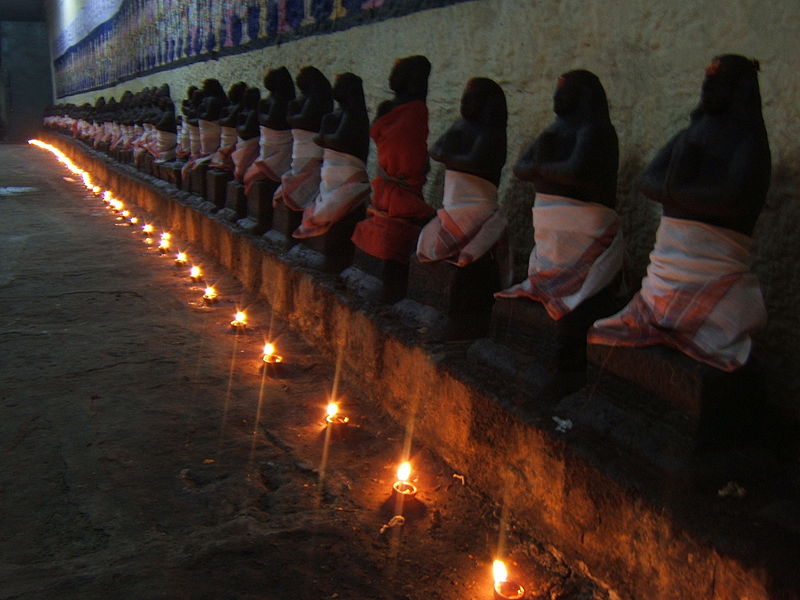
63 Nayanmars contributed to the growth of Saivism By Ilya Mauter – Own work, CC BY-SA 3.0, https://commons.wikimedia.org/w/index.php?curid=3911989
Education and Literature
Pallavas were great patrons of literature and education. Pallavas capital is Kanchi was an ancient centre of learning.
Ghatika at Kachi attracted many students and scholars from all parts of India and the world. The founder of the Kadamba dynasty, Mayurasarman learned Vedas at Kanchi. Dinganaga, a Buddhist writer studied at Kanchi.
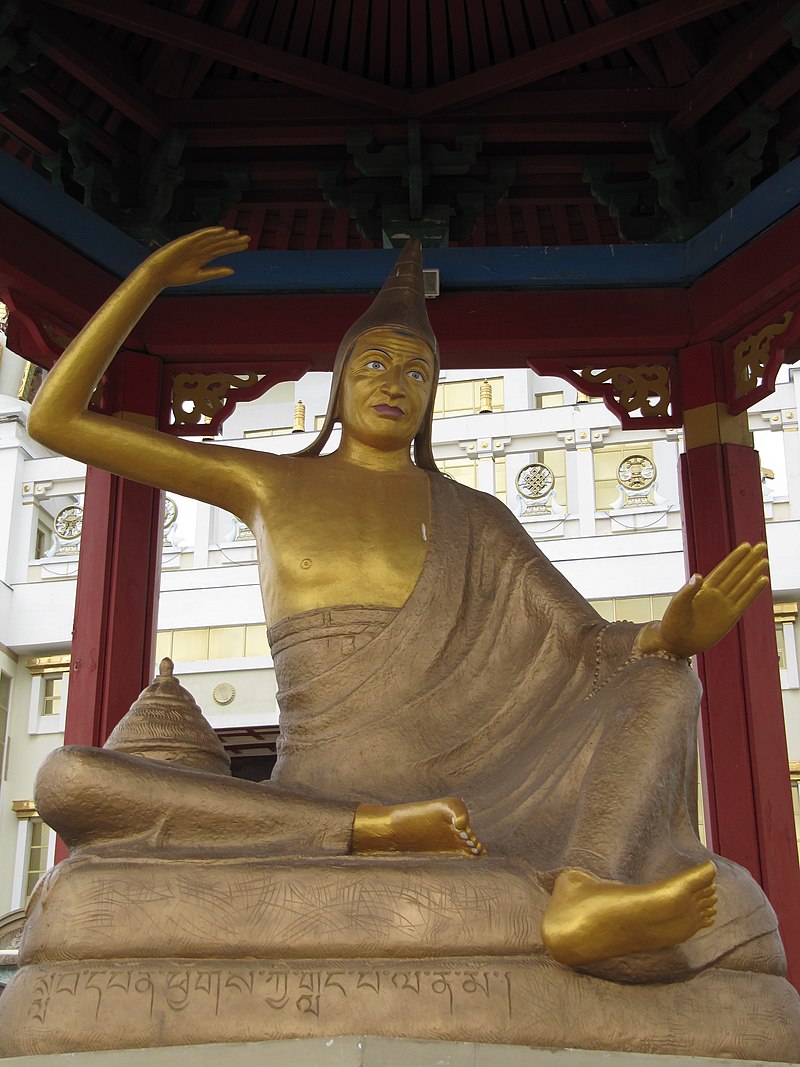
Dinganaga, a Buddhist writer studied at Kanchi By Rartat – Own work, Public Domain, https://commons.wikimedia.org/w/index.php?curid=12013279
Dharmapala, who later became the Nalanda University head which belonged to Kanchi. Bharavi a great Sanskrit scholar lived in the time of Simhavishnu. Dandin adorned the court of Narasimhavarman-II.
Mattavilasaprahasanam, a Sanskrit play was written by Mahendravaraman-I. Tamil Literature also developed. Nayanmars and the Nalayradivyaprabandam composed Tamil religious hymns.
The Devaram is composed of Nayanmars and the Nalayradivyaprabandam is composed of Alwars.
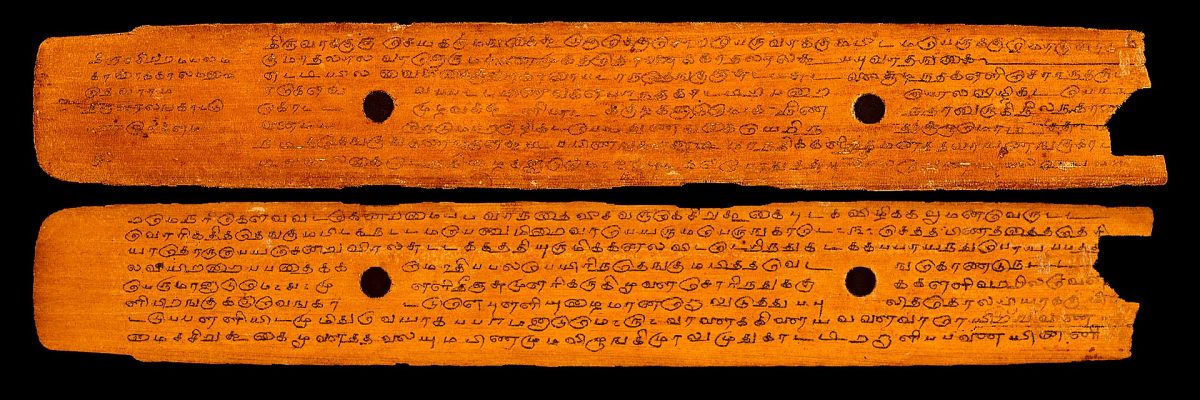
Devaram is composed of Nayanmars By Ms Sarah Welch – Own work, CC0, https://commons.wikimedia.org/w/index.php?curid=100420294
Perundevanar was patronized by Nandivarman-II and he translated the Mahabharata in Tamil and named it Bharathavenba. Nandikkalambagam was important to work in this period but the sad Author of this work is still unknown. Music and Dance also developed during this period.
Conclusion
The contribution of the Pallavas to the cultural development of Tamil Nadu is significant. They had encouraged the growth of Tamil and Sanskrit literature.
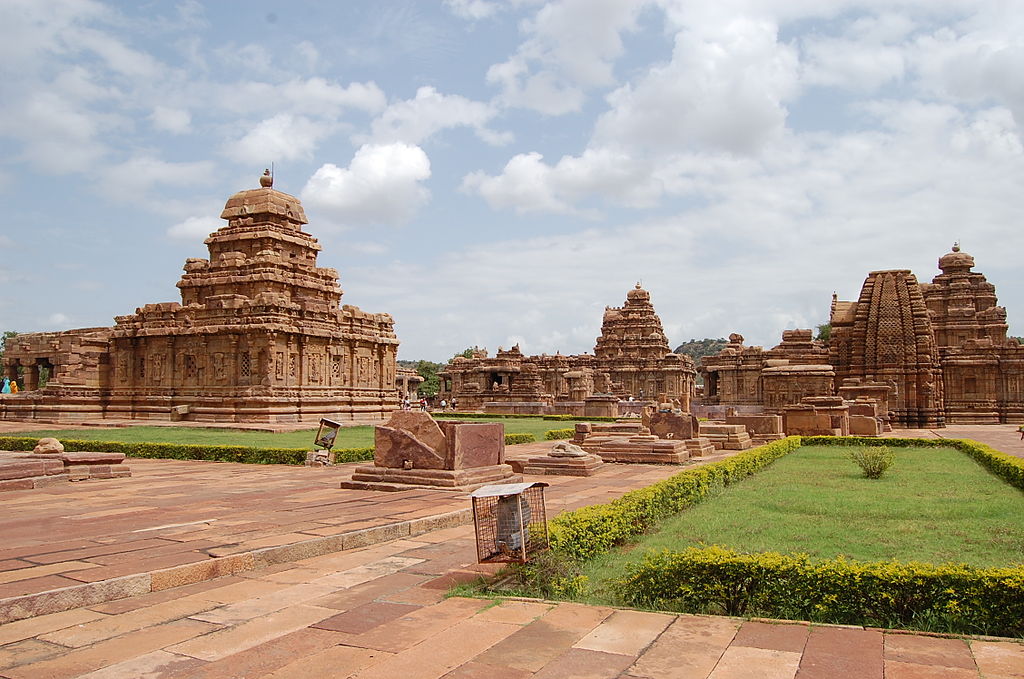
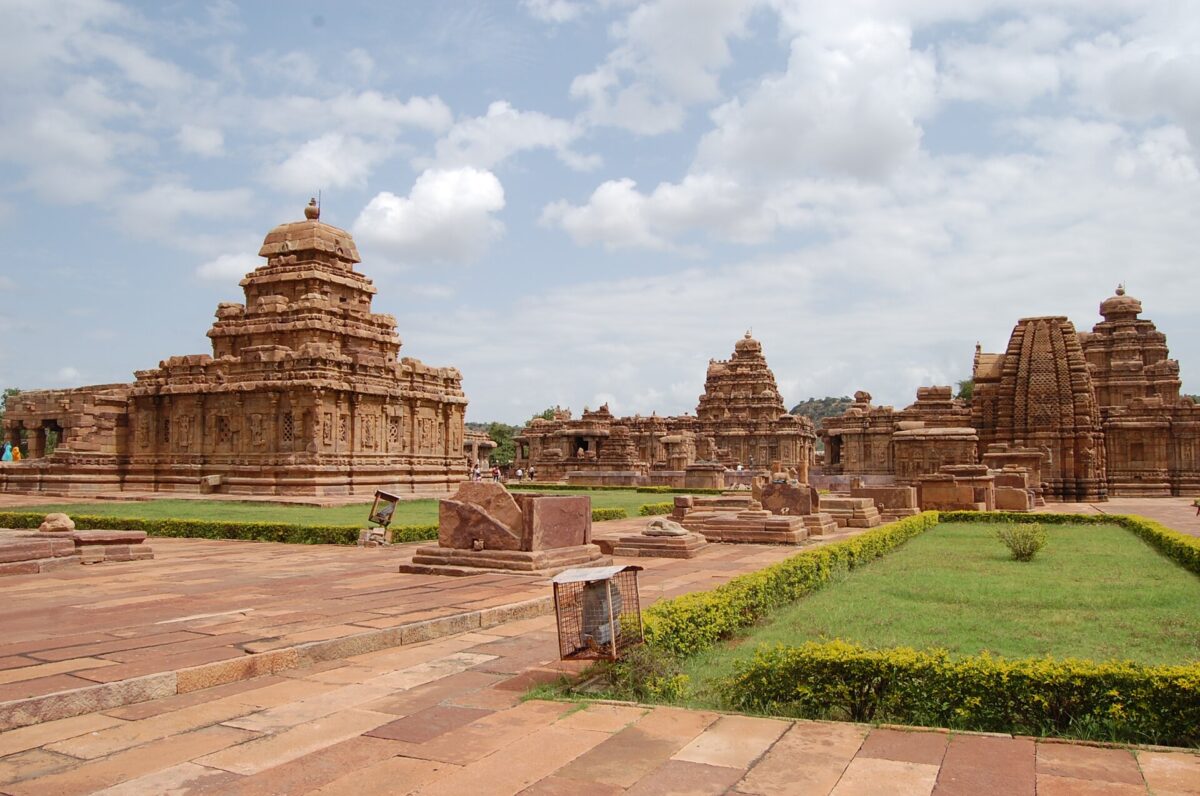
Vesara Style: A blend of Nagara and Dravida architectural styles, this unique form of temple design emerged and thrived in the regions of Aihole, Badami, and Pattadakal.
Notable Sites:
Pattadakal
Aihole
Badami
Cave Temples:
Located in Ajanta, Ellora, and Nasik.
These temples are monolithic, carved directly into sloping hillsides.
While dedicated to Brahmanical deities, their design and craftsmanship reflect strong Buddhist influences.
Pattadakal
Pattadakal is renowned for its ten magnificent temples constructed during the 7th and 8th centuries, primarily dedicated to Lord Shiva. The most notable among them are the Papanatha Temple (built around 680 AD) and the Virupaksha Temple. Elements of Vaishnavism and Shaktism are also intricately woven into the site’s theological and legendary depictions.
Architectural Style: The temples represent a fusion of two prominent Indian architectural traditions:
Rekha-Nagara-Prasada (North Indian style)
Dravida-Vimana (South Indian style)
The Ten Temples:
Kadasiddheshwar Temple
Jambu Lingeshwara Temple
Galaganatha Temple
Chandrashekhara Temple
Sangameshwara Temple
Kashi Vishwanath Temple
Mallikarjuna Temple
Virupaksha Temple
Papanatha Temple
Jain Narayana Temple
Highlights:
Papanatha Temple: Features a stunted, low tower characteristic of the northern architectural style.
The site is mentioned in historical texts by Srivijaya and is identified as “Petirgal” in Ptolemy’s Geography.
UNESCO Recognition: Pattadakal is described by UNESCO as “a harmonious blend of architectural forms from northern and southern India.”
Construction Materials: The temples were primarily built using locally abundant sandstone. Some sculptures are exquisitely carved from polished black granite.
Badami Temples
Hindu and Jain Cave Temples Complex:
This complex comprises a blend of Hindu and Jain cave temples, showcasing diverse architectural styles and religious influences.
Caves 1-4:
Material: Sandstone formations.
Notable Feature: Cave 1 depicts Shiva performing the Tandava dance as Nataraja.
Bhutanatha Group of Temples:
Location: Situated along the serene Agasthya Lake.
Historical Evolution:
Initially influenced by Jain traditions.
Later taken over by the Lingayats, who installed a Shiva Linga in the shrine and a Nandi in front.
Architectural Style: A harmonious blend of North Indian and early South Indian temple architecture.
Mallikarjuna Temple:
Location: Northeast of Agasthya Lake.
Historical Context: Dates to the later Chalukyas (Chalukyas of Kalyani).
Architecture:
Features a tiered pyramid structure, emblematic of Western Chalukya architecture.
Shikhara: Designed in the Dravidian style.
Additional Highlights:
Most Early Chalukyan caves and temples in Badami, except for Upper Shivalaya, are nirandhara structures (without circumambulatory paths).
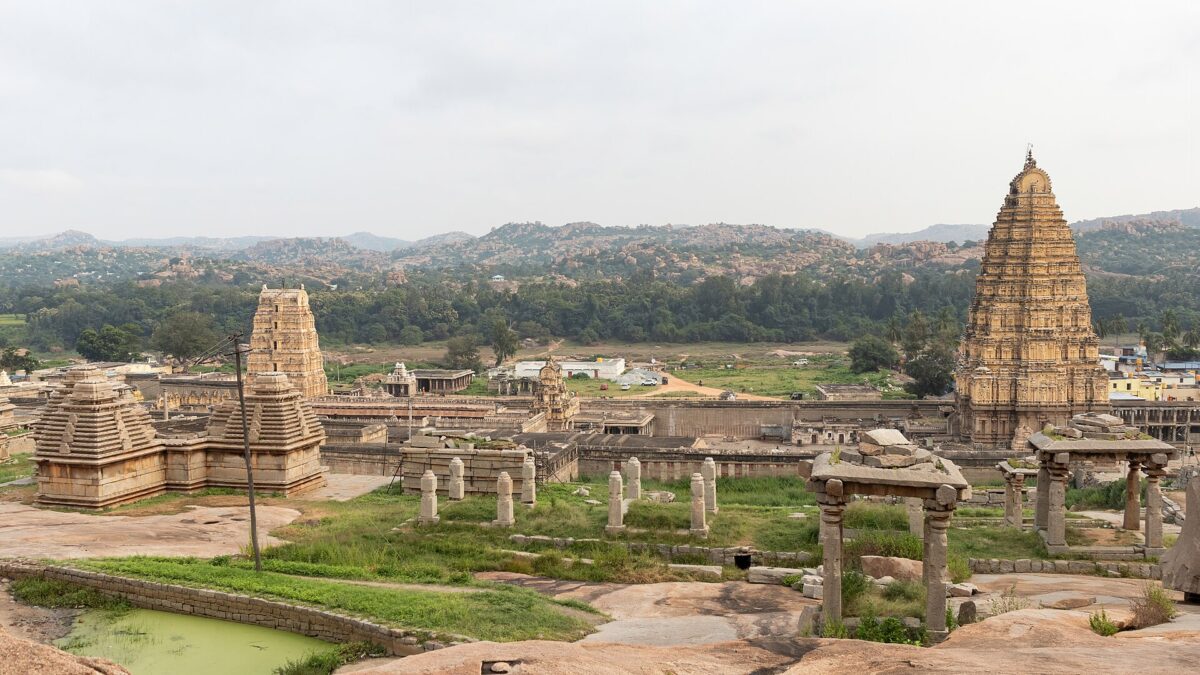
Virupaksha Temple
The Largest Monument in Pattadakal:
Built in 740 AD by Queen Lokamahadevi, this grand temple was constructed to commemorate her husband’s victory over southern kings.
Architectural Features:
Style: Purely South Indian (Dravidian).
Tower (Shikhara):
A towering three-storey pyramidal structure rises above the sanctum (garbhagriha).
Each tier features intricate motifs that mirror the carvings within the sanctum.
Temple Layout:
Orientation: Faces east.
Key Components:
A square sanctum (garbhagriha) with a circumambulatory path (pradakshina patha).
An antarala (vestibule) flanked by two small shrines dedicated to Ganesha and Mahishamardini, positioned opposite each other.
Nandi-Mandapa:
Located to the east of the temple, this square pavilion is open on all four sides.
Houses a large image of Nandi placed on a raised platform.
Carvings and Depictions:
The sanctum walls are adorned with scenes from the Ramayana and deities from Shaivism, Vaishnavism, and Shaktism traditions.
Known as Sri Lokeshwara Mahashila Prasada to honor Queen Lokamahadevi, who commissioned this magnificent structure.
Aihole
The region flourished primarily during the reigns of Pulakesin I and Pulakesin II. Aihole, often regarded as the cradle of Indian temple architecture, is dotted with several groups of temples and two cave shrines.
Ravanphadi Cave
Structure: Consists of a mandapa (hall), garbhagriha (sanctum sanctorum), and two side galleries flanking the mandapa.
Artwork: Houses a 6th-century relief depicting the dancing Shiva (Nataraja) with Parvati, Saptamatrikas (seven mothers of the Shaktism tradition), Ganesha, and Kartikeya.
Temple Layouts
Sandhara: Features a circumambulatory path.
Nirandhara: Lacks a circumambulatory path.
Superstructures
Shikhara: Tapering superstructure composed of discrete squares.
Mundamala: Temple without a superstructure, literally meaning “garland with a shaved head”.
Rekha-Prasada: Smooth, curvilinear superstructure based on squares, common in northern and central India.
Dravidian Vimana: Pyramidal style typical of southern India.
Kadamba-Chalukya Shikhara: A fusion style.
Notable Temples
Guadar Gudi: Features a centrally located garbhagriha, a Sandhara structure, and a mundamala shikhara.
Huchhimalli Gudi and Huchhapayya Gudi: Signify the development of the Rekha-Prasada type of shikhara.
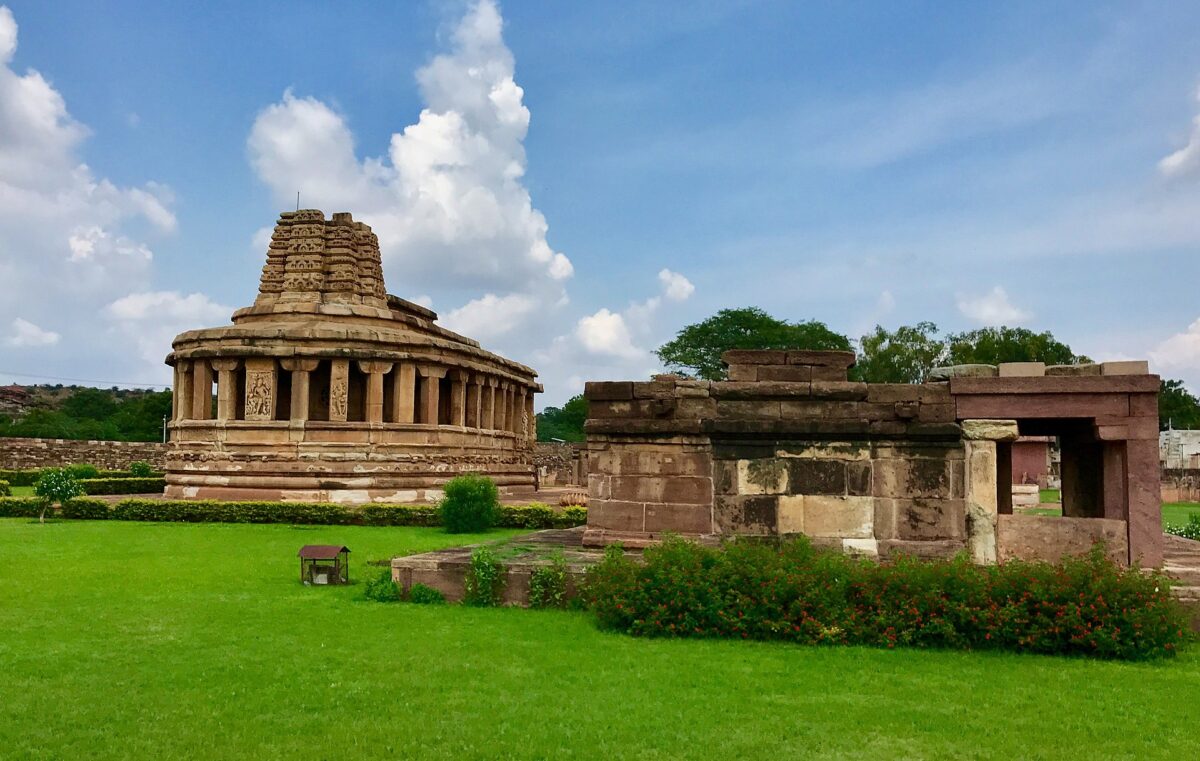
Durga Temple: Notable for its apsidal plan, which is rare in early Chalukyan temples, and it also follows a Sandhara layout.
Architectural Significance
Construction: Vertical construction using blocks of stone.
Shikharas: Unique curvilinear and pyramid-like shikharas developed here, which were not seen in the southern regions.
Other Monuments
Buddhist Monument: Located on Meguti Hill.
Jain Monuments: Aihole preserves four collections of about ten Jain monuments from the 6th to 12th centuries, associated with the Meena Basti. These are found on Meguti Hill, Chanranthi Matha, Yoginarayana Complex, and an early Jaina cave temple.
Religious Diversity
While most temples are Brahmanical, Aihole also houses several Jain temples, reflecting the religious diversity and architectural richness of the period.
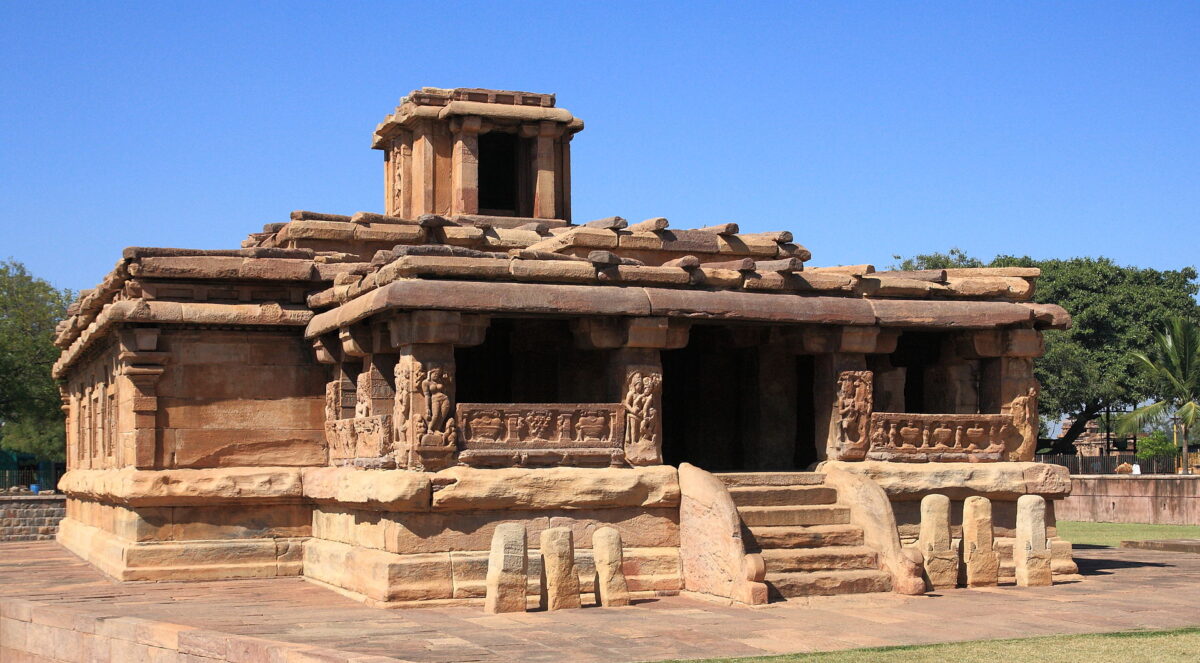
Lad Khan Temple (Aihole)
Also referred to as the Chalukya Shiva Temple, this structure was originally dedicated to Vishnu.
Architectural Style:
The temple follows the Panchayatana style, featuring a central shrine surrounded by four smaller shrines.
Special Feature:
The temple transitions from a rectangular layout at the base to a square structure at the top.
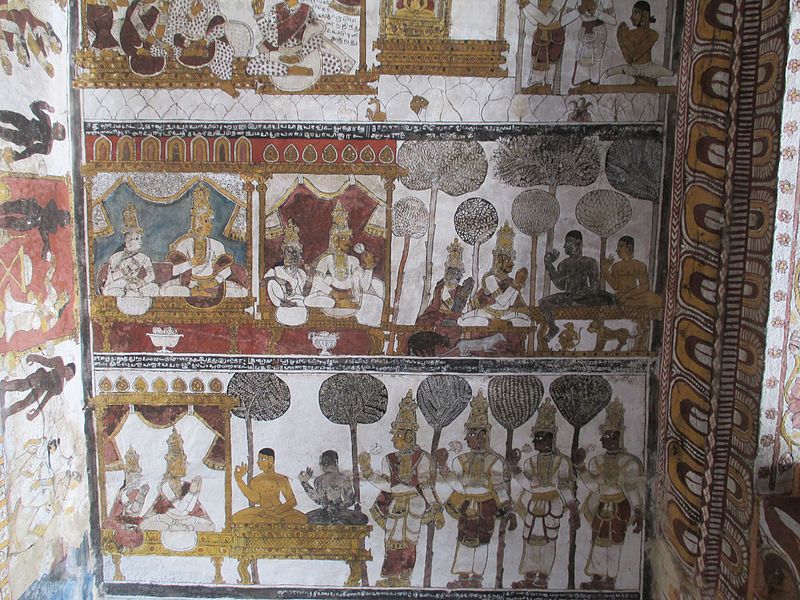
Paintings
In Badami, paintings are found in a cave temple dedicated to Vishnu. The Chalukyas embraced the Vakataka style of painting, with many artworks depicting various incarnations of Vishnu.
One of the most famous Chalukya paintings adorns the palace built by King Mangalesan (597-609). It portrays a scene of a ball being observed by the royal family and other guests.
Conclusion
The Chalukya dynasty’s architectural legacy is a testament to their artistic brilliance. Their temples in Aihole, Badami, and Pattadakal showcase a harmonious blend of Dravidian and Nagara styles, with intricate carvings and soaring shikharas. The Chalukyas’ artistic influence extended beyond architecture, encompassing paintings, sculptures, and literature.
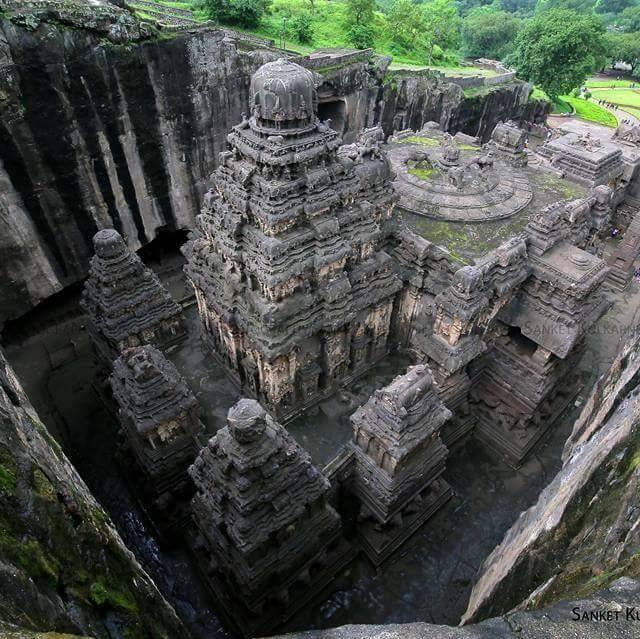
The finest Rashtrakutas art and architecture were found at Ellora and Elephanta. Kailasa temple is a great temple at Ellora and has been excavated during ruling under Krishna-I. Kailasa temple was carved out from a huge rock of size 200 x 100 feet.
The temple, the shrine has four parts that are the doorway, a shrine for Nandi, and mandapa that surrounds the courtyard. The height of plinth (heavy base supporting base) over which the temple stands of height 25 feet.
The central face of the plinth has an elephant and lion figure, it is made in such a way that the whole temple is placed over the back of the elephant and lion . The three-tiered sikhara resembles the Mamallapuram rathas.
The interior of the temple has sixteen square pillared halls. The Kailasa temple has a sculpture of Durga killing the Buffalo Demon. Another sculpture has Ravana lifting the mount Kailasa.
The wall was depicted with the scenes of Ramayana. The architectural style of the Kailasa temples the more of Dravidian style. Another example of Rashtrakutas architecture is at an island near Bombay called Elephanta.
Island Elephanta is formerly called Sripuri. The Portuguese after seeing the elephant figure in Sripuri named the island Elephanta. The Rashtrakutas art and architecture reached their zenith in Elephanta.
There is a similarity between the sculptures of Ellora and Elephanta, there might same craftsmen who worked in Ellora and Elephanta. There are big figures of Dwarka-palakas at the doorway to the sanctum
There are pictures of Shiva in different forms such as Nataraja, Gangadhara, Ardhanareesvara, and Somaskanda in the wall of Prakara around the sanctum.
The main deity of the temple is Trimurthi. Shiva as creator, preserver, and destroyer is represented in three aspects by six-meter-high sculpture.
Temples built by Rashtrakutas
Kailasa Temple at Ellora, Maharashtra
Jain Narayan Temple at Pattadakal , Karnataka
Elephanta Caves, near Bombay
Cultural Contributions
The Rashtrakutas widely patronized Sanskrit literature.
There have been many scholars within the Rashtrakuta court. Trivikrama wrote Nalachampu and therefore the Kavirahasya was composed by Halayudha during the reign of Krishna III. The Jain literature flourished under the patronage of the Rashtrakutas.
Amogavarsha I, who was a Jain patronized many Jain scholars. His teacher Jinasena composed Parsvabhudaya, a biography of Parsva in verses. Another scholar Gunabhadra wrote the Adipurana, the life stories of various Jain saints.
Sakatayana wrote the grammar work called Amogavritti. The great mathematician of this era, Viracharya was the author of Ganitasaram.
The Kannada literature saw its beginning during the amount of the Rashtrakutas. Amogavarsha’s Kavirajamarga was the primary poetic add Kannada language. Pampa was the best of the Kannada poets. His famous work was Vikramasenavijaya. Ponna was another famous Kannada poet and he wrote Santipurana.
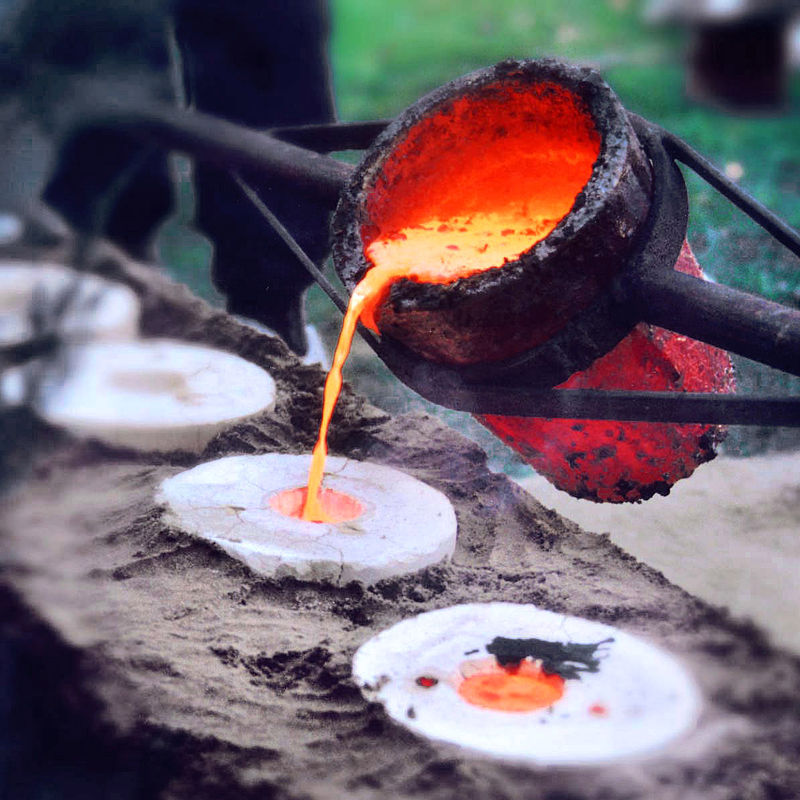
The lost-wax technique or process is used for making objects of metals. This process is mostly used in Himachal Pradesh, Odisha, Bihar, Madhya Pradesh, and West Bengal.
The technique differs slightly in each region. The low wax process involves different steps.
First, the wax model of the image is made by the hand of pure beeswax the has been made liquid by melting over an open fire and then strained through a fine cloth into the basin of cold water.
Then the wax resolidifies immediately and is pressed through a pick or pharni that squeezes the wax into a noodle-like shape. These wax noodles then wound around to the shape of the image.
Next, the image is covered with a thick coating of paste that is made of equal parts of clay, sand, and cow dung. Into an opening on one side, a clay pot is fixed and in this molten metal is poured.
The weight of the metal to be used is ten times that of wax. Here used in the entire process is measured. The metal used here is the scraps of broken pots, pans, etc.
The molten metal is poured into the clay pot. Now the clay plastered model is exposed to firing. As the wax inside melts, the metal flows down the channel, and then it takes on the shape of the wax image.
This process is carried out like a religious ritual and all the steps take place in dead silence.
The image is later chiseled with files to smoothen and to give a smooth finish.
Sometimes an alloy of five metals such as gold, silver, copper, brass, and lead is used to cast bronze images.
Some famous bronze statues are Devi Chola Bronze, Ganesh Kashmir 7th Century, Nataraja Chola Period 12th century AD.
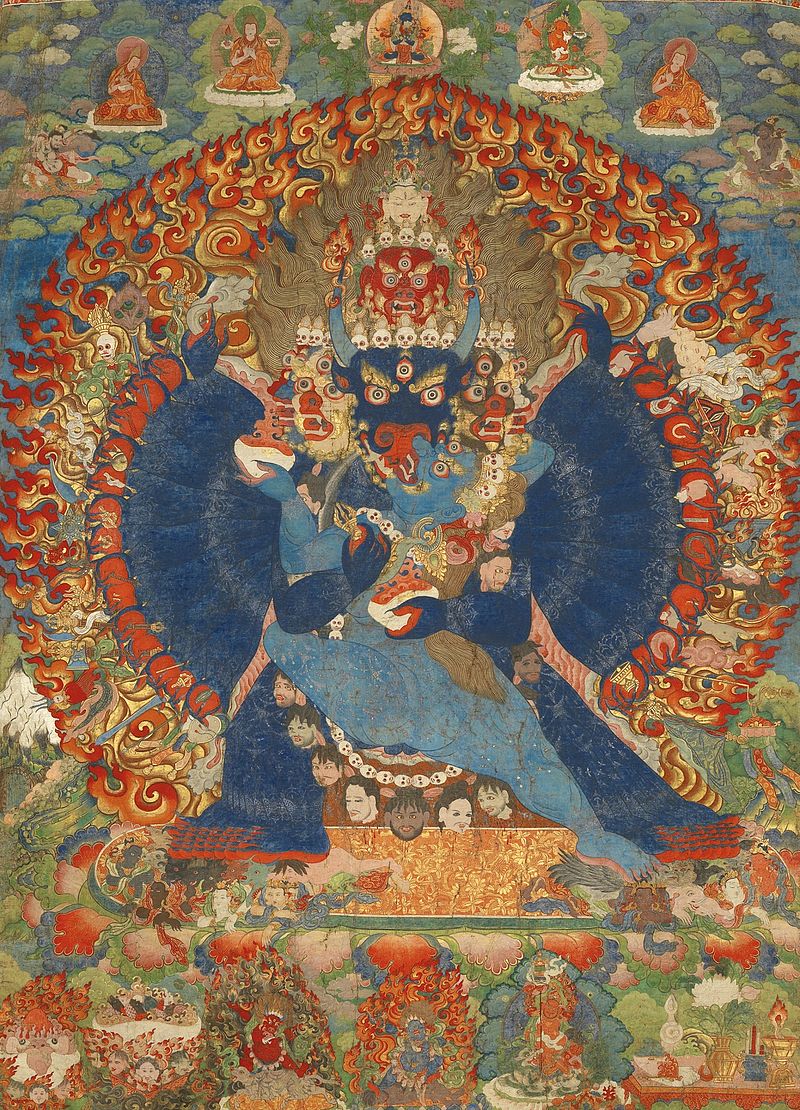
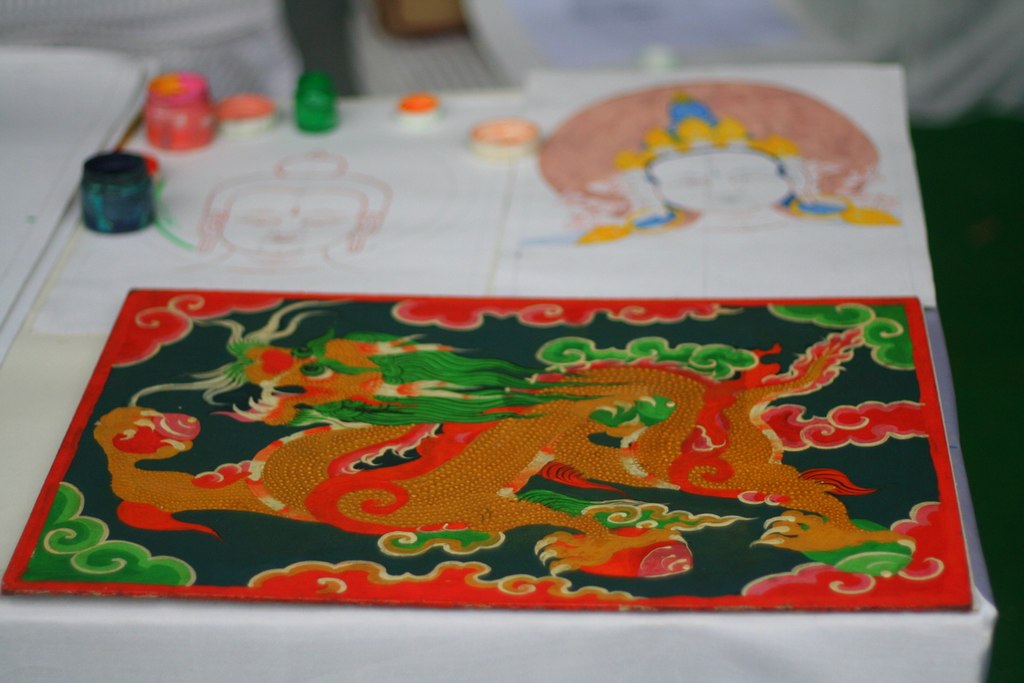
Thangka paintings are commonly practiced in the states of Sikkim, Himachal Pradesh, Ladakh, and Arunachal Pradesh.
Thangka painting plays a significant role in showcasing the artistic traditions of the region. Thangka paintings in Arunachal Pradesh often depict various aspects of Buddhist iconography, including representations of Buddha, Bodhisattvas, and other deities.
These intricate paintings are created using a combination of vibrant colors, intricate details, and precise brushwork. The process of creating a Thangka painting in Arunachal Pradesh follows a traditional method that has been passed down through generations.
The artists start by preparing the canvas, which is typically made of cotton or silk. They carefully sketch the design using charcoal or pencil, ensuring accuracy and proportionality.
Once the sketch is complete, the artists outline the design using black ink, creating a clear and defined composition. They then fill in the colors using mineral pigments, which are mixed with water and applied with great precision. Gold leaf and other embellishments may also be added to enhance the aesthetic appeal of the painting.
Thangka painting in Arunachal Pradesh is not just a form of artistic expression but also holds deep religious and spiritual significance. These paintings are often used as visual aids during meditation and serve as a means of transmitting Buddhist teachings and philosophies.
Types of Thangka Paintings
Padmasambhava Thangka
This thangka depicts Padmasambhava, the founder of Tibetan Buddhism. Padmasambhava is also called Guru Rinpoche, meaning “Precious Guru” in Tibetan language. He is shown sitting in a lotus position, surrounded by his eight manifestations.
This eight manifestion signifies, eight different forms he took to teach the dharma in Tibet. The thangka is typically painted on cotton or silk and is adorned with elaborate borders.
This Thangka paintings are mostly used as aids in meditation and also believed that these paintings have protective and sacred powers.
Guru Rinpoche Thangka: This thangka depicts Guru Rinpoche, another important figure in Tibetan Buddhism. He is shown seated on a lotus throne, surrounded by his disciples. The thangka is typically painted in bright colors and features intricate details.
Mandala Thangka: This thangka depicts a mandala, a geometric figure with symbolic meaning. Mandalas are often used as aids in meditation and are believed to represent the universe. The thangka is typically painted in vibrant colors and features complex patterns.
Buddha Thangka: This thangka depicts the Buddha, the central figure of Buddhism. He is shown seated in a lotus position, surrounded by his disciples. The thangka is typically painted in serene colors and features simple lines.
What is the purpose of Thangka Paintings?
It was originally used as a medium of reverence which evoked the highest ideals of Buddism. These paintings are divided into three types based on their deception and meaning. The first type shows the life of Buddha from birth to the attainment of enlightenment.
The second type shows the “Wheel of life”, which represents the Buddist beliefs of life and death.
The third one is paintings which are used for offerings to gods/deities or meditations.
Thangka Painting Making By Ramesh Lalwani – https://www.flickr.com/photos/ramesh_lalwani/13136017583/, CC BY 2.0, https://commons.wikimedia.org/w/index.php?curid=100402393
What do thangka paintings depict?
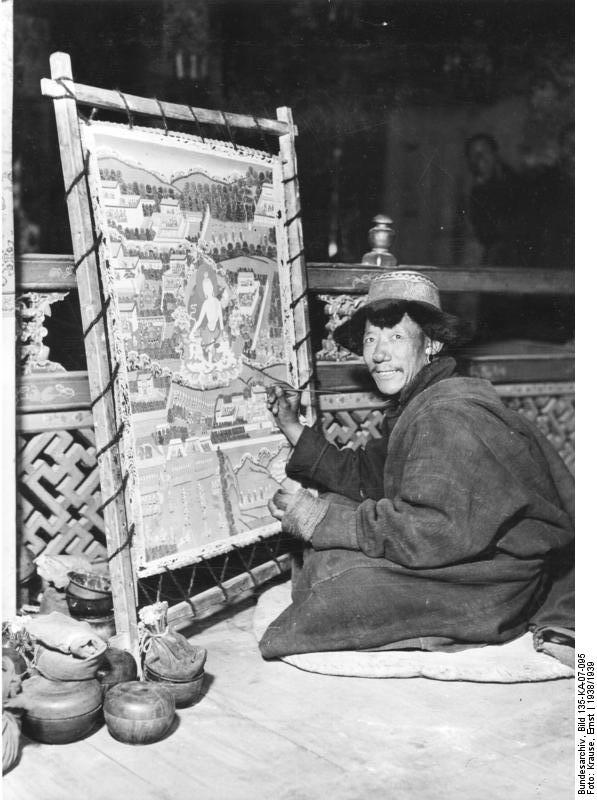
Lhasa, Lama beim Bemalen eines Gebetsteppichs (Tangka), Potala By Bundesarchiv, Bild 135-KA-07-095 / CC-BY-SA 3.0, CC BY-SA 3.0 de, https://commons.wikimedia.org/w/index.php?curid=5337885
Thangka painting is art depicting the life of Buddha and other deities. It also influences the mythological event relating and concerning to Lamas.
How is thangka painting made?
Thangkas are painted on canvas. The canvas is strung on a bamboo frame, which is then stretched onto a frame made of wood.
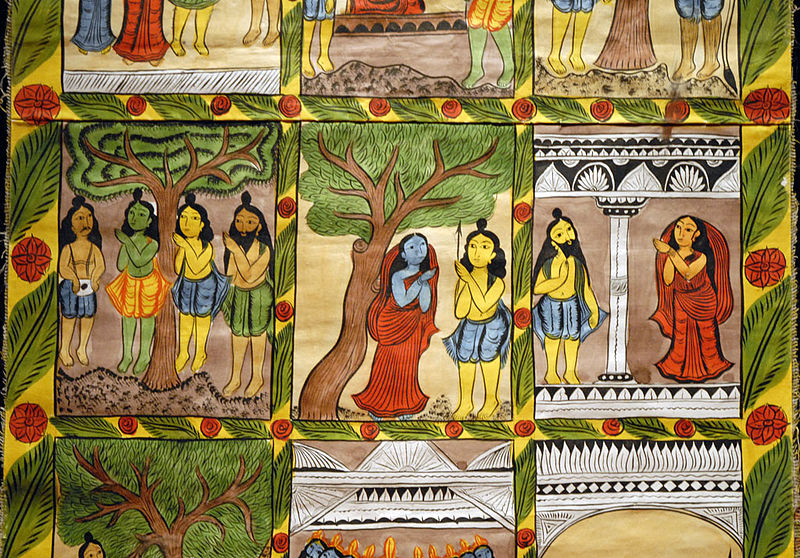
It is traditional paintings of Odisha, where no pencil or charcoal is used but rather a brush is used to draw the outlines.
These paintings have themes that are inspired by the Jagannath and the Vaishnava cult.
Pattachitra By Jean-Pierre Dalbéra from Paris, France – Extrait de Ramayana de Hazra Chitrakar (Naya / Bengale), CC BY 2.0, https://commons.wikimedia.org/w/index.php?curid=24674077
Warli Painting
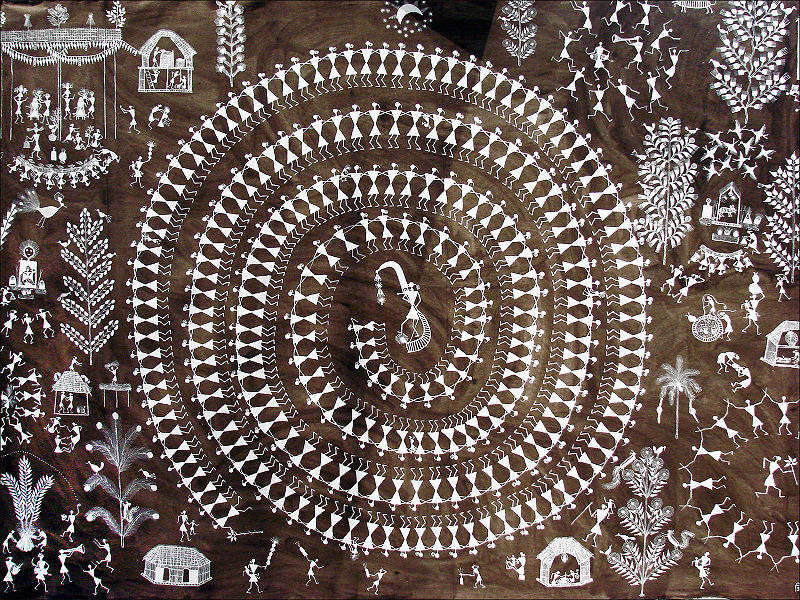
These paintings are by the indigenous people who live in Gujarat and Maharashtra knowns as Warli.
Warli painting has a resemblance to the Bhimbetkas Mural paintings.
The painting is ritualistic, which features a central motif of Chaukat or Chauk, which is an open place in the middle of the house.
Warli Painting By [https://www.flickr.com/people/72746018@N00 Jean-Pierre Dalb�ra] from Paris, France – [https://www.flickr.com/photos/72746018@N00/4489190461/ Jivya Soma Mashe (Mus�e du Quai Branly)], CC BY 2.0, https://commons.wikimedia.org/w/index.php?curid=10052344
Saura Paintings
Saura Paintings are also from Odissa and are made by Tribes called Saura of Odissa/Orissa.
It is traditionally made on the red or brown clay walls of homes. The dyes are made of rice, white stones, etc. The only colors used by Sauras are Geru(Red Earth) and White (Rice Paste).
These are which are visually much the same as the Warli Painting.
It is a style of wall mural painting that is done by the Saura tribes of Odisha. These paintings are also called Ikons or Ekons. These paintings are meant to appease the deity, Edital.
By tradition is this artwork is done only by the priest and they would explain its meanings to the village folk and pass their customs in oral tradition.
As per local folks, Savari who is a women devotee of Lord Rama, and Jara, who is a hunter who wounded Lord Krishna belong to these tribes.
Manjusha Paintings
Manjusha means box, these paintings were executed on the boxes made of Jute and paper.It originates in Bihar, Bhagalpur region and this painting is also known as Angika Art.
It is also called Snake paintings since the snake motifs are present in it.
Pithora Paintings
Pithora paintings are done by tribes who live in communities in the states of Gujarat and Madya Pradesh. In these paintings the common features in the depiction of animals and especially the horses.
These paintings are folk art culture of Gujarat done on the walls. Pithora paintings are more ritual than art, that are performed by tribes like Rathwas, Bhilalas, etc.
This painting is historically derived from the cave, wall, and rock paintings and has spiritual and mythological relevance.
India is a vibrant and complex tapestry of cultures, traditions, and social dynamics that make it one of the most unique societies in the world. Let’s explore the remarkable salient features that define the Indian social landscape.
Diversity: The Cornerstone of Indian Society
India is a living testament to unity in diversity. The society is characterized by an extraordinary blend of multiple dimensions:
Multi-Ethnic Composition: Home to hundreds of ethnic groups with distinct identities
Multilingual Culture: Over 22 official languages and 500+ dialects coexisting harmoniously
Religious Pluralism: A melting pot of religions including Hinduism, Buddhism, Islam, Christianity, Sikhism, and many more.
Social Structure and Dynamics
Caste and Class Interplay
The traditional caste system continues to evolve, with modern economic reforms creating new avenues for social mobility. While historical hierarchies persist, there’s a gradual transformation towards a more class-based social structure.
Patriarchal Traditions
Indian society remains predominantly patriarchal, with deep-rooted gender roles and challenges:
Male dominance in social and economic spheres
Persistent gender wage gaps
Ongoing struggles against discriminatory practices like dowry and female infanticide.
Cultural Equilibrium
Tradition Meets Modernity One of the most fascinating aspects of Indian society is its ability to balance traditionalism and modernism. This is evident in:
Fusion of western and traditional clothing styles
Coexistence of modern gym culture with ancient yoga practices
Adaptation of global cuisines with local flavors.
Unique Social Characteristics
Kinship and Family: Strong emphasis on family bonds and extended family structures
Tolerance and Mutual Respect: Acceptance of diverse cultural and religious practices
Collective Values: Prioritizing community welfare over individual achievements.
Evolving Social Landscape
The Indian society is not static but dynamically adapting. Social media and technological advancements are playing crucial roles in:
Preserving traditional cultural practices
Providing platforms for social discourse
Challenging existing social norms.
Conclusion
Indian society represents a complex, resilient, and continuously evolving social system. Its ability to accommodate diverse identities while maintaining a sense of collective unity makes it truly exceptional on the global stage.
* * All the Notes in this blog, are referred from Tamil Nadu State Board Books and Samacheer Kalvi Books. Kindly check with the original Tamil Nadu state board books and Ncert Books.