1. Introduction, Meaning, and Constitutional Placement
- Constitutional Location: Enshrined in Part IV of the Constitution, spanning Articles 36 to 51.
- Origin and Inspiration:
- The framers borrowed the concept from the Irish Constitution of 1937, which had adapted it from the Spanish Constitution.
- Notable sources also indicate structural parallels to the Instrument of Instructions issued under the Government of India Act of 1935.
- Philosophical Essence & Characterizations:
- Dr. B.R. Ambedkar identified these principles as novel features of the Constitution, emphasizing that their core objective is establishing economic democracy alongside political democracy.
- Granville Austin referred to the Fundamental Rights and the Directive Principles together as the “Conscience of the Constitution”.
- They embody the ideals of establishing a welfare state rather than a colonial-era police state.
- Definition of “State” (Article 36):
- In Part IV, the term “State” shares the same definition as provided under Part III (Fundamental Rights), encompassing legislative and executive organs across Union, State, and local levels, along with other statutory and public authorities.
2. Nature, Sanction, and Enforceability
- Non-Justiciable Character (Article 37):
- DPSPs are not legally enforceable through the courts of law for any non-compliance or violation.
- Consequently, judicial orders cannot directly compel the central, state, or local authorities to enforce them.
- Constitutional Obligation (Article 37):
- Article 37 explicitly affirms that these directives are fundamental in governance, making it the bounden duty of the State to apply them when framing legislation and formulating policies.
- Ultimate Sanction Behind Directives:
- Unlike Fundamental Rights which enjoy legal sanctions, the primary sanction supporting DPSPs is political and moral—specifically, an awakened public opinion and accountability before voters during elections.
- Reasons for Non-Justiciability at Framing:
- Severe limitation of financial resources in the newly independent country.
- Enormous societal diversity and backwardness posing logistical challenges.
- Avoiding an overwhelming burden on the developing Indian State, allowing it freedom regarding time, mode, and priority of execution.
- Judicial Utility:
- Courts routinely reference DPSPs to assess the constitutional validity of laws, determining whether legislative restrictions under Article 14 or Article 19 are reasonable when enacted to achieve these directive objectives.
3. Classification of the Directive Principles
The Constitution does not explicitly group these articles, but based on ideological leanings and content, they are categorized into three broad divisions:
A. Socialistic Principles
Aim to realize a democratic socialist state providing socio-economic justice:
- Article 38: Securing a just social order to foster public welfare and reducing disparities regarding income, status, facilities, and opportunities.
- Article 39: Guiding state action to secure:
- Adequate means of livelihood for all citizens.
- Fair and equitable distribution of material resources for public benefit.
- Prevention of concentration of wealth and means of production to common harm.
- Equal remuneration for identical work across genders.
- Protection of the health, stamina, and wellbeing of workers and preventing abuse of young children.
- Sufficient opportunities ensuring healthy development of children.
- Article 39A: Facilitating equal justice and offering free legal aid to underprivileged citizens.
- Article 41: Assuring the right to work, education, and public assistance during unemployment, infirmity, sickness, and old age.
- Article 42: Creating humane and just conditions of labor, including provisions for maternity relief.
- Article 43: Ensuring all workers receive a living wage, reasonable working hours, decent living conditions, and avenues for social and cultural life.
- Article 43A: Empowering workers by providing avenues for their participation in industrial management.
- Article 47: Enhancing the level of public nutrition, raising general living standards, and bettering overall public health.
B. Gandhian Principles
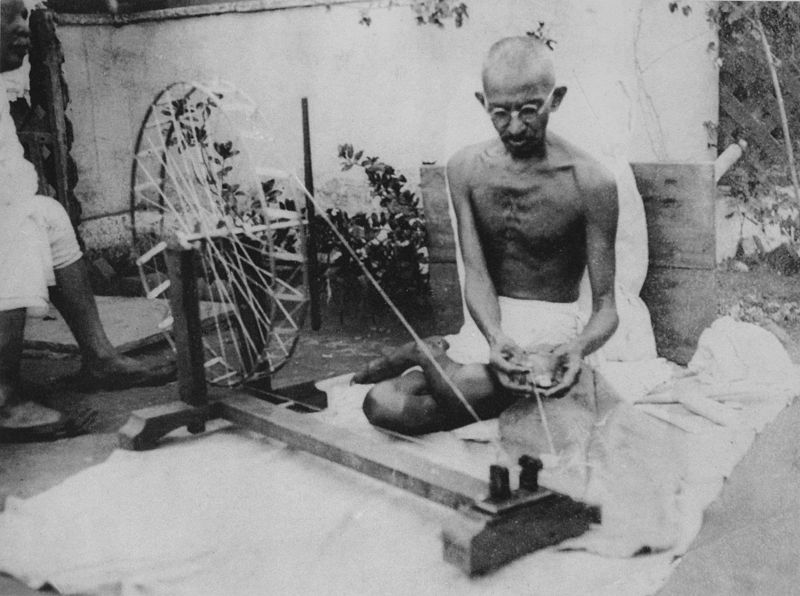
Incorporate the national movement’s rural and social reconstruction agenda envisioned by Mahatma Gandhi:
- Article 40: Establishing village panchayats and giving them authority to operate as genuine self-governing units.
- Article 43: Promoting cottage and rural industries on an individual or cooperative basis.
- Article 43B: Promoting democratic control, professional administration, autonomous functioning, and voluntary setup of cooperative societies.
- Article 46: Protecting the educational and economic advancements of Scheduled Castes, Scheduled Tribes, and other vulnerable sections, shielding them against social injustices and exploitation.
- Article 47: Enforcing the prohibition of intoxicating drinks and toxic substances harmful to individual health.
- Article 48: Halting the slaughter of cows, calves, and draught cattle, alongside improving their breeds.
C. Liberal–Intellectual Principles
Reflect principles rooted in liberal governance and institutional independence:
- Article 44: Striving toward a Uniform Civil Code applicable to all citizens nationwide.
- Article 45: Fostering early childhood care and offering education to every child until they attain the age of six years.
- Article 48: Organizing modern and scientifically backed techniques in agriculture and animal husbandry.
- Article 48A: Protecting and enhancing environmental ecosystems, including forests and wildlife.
- Article 49: Preserving artistic, historical, and declared monuments or locations of national significance.
- Article 50: Safeguarding public administration by keeping the judiciary separated from executive branches.
- Article 51: Fostering international harmony, maintaining just relationships among nations, respecting treaty obligations, and resolving disputes via arbitration.
4. Directives Added or Modified by Constitutional Amendments
- 42nd Amendment Act (1976): Introduced four new directives:
- Opportunities for healthy development of children (Article 39).
- Promotion of equal justice and free legal assistance (Article 39A).
- Ensuring worker participation in industrial management (Article 43A).
- Safeguarding forests, wildlife, and the environment (Article 48A).
- 44th Amendment Act (1978):
- Mandated minimizing inequalities concerning income, social status, and access to opportunities under Article 38.
- 86th Amendment Act (2002):
- Modified the scope of Article 45 to emphasize early childhood care up to six years of age (following the elevation of primary education to a Fundamental Right under Article 21A).
- 97th Amendment Act (2011):
- Added Article 43B, aiming for the voluntary, professional, and autonomous management of cooperative societies.
5. Conflict with Fundamental Rights and the Basic Structure Doctrine
The tension between justiciable Fundamental Rights (Part III) and non-justiciable DPSPs (Part IV) evolved across several landmark cases:
- Champakam Dorairajan Case (1951):
- The Supreme Court held that in situations of conflict, Fundamental Rights prevail over DPSPs; the directives must remain subordinate to rights, although Parliament can amend Part III to give effect to directives.
- Golaknath Case (1967):
- The Court held that Parliament could not amend, abridge, or abolish Fundamental Rights to enforce DPSPs, viewing Fundamental Rights as sacrosanct.
- 25th Amendment Act (1971) & Article 31C:
- Parliament enacted Article 31C stating that laws aimed at giving effect to Article 39(b) and Article 39(c) could not be struck down for violating Articles 14, 19, or 31.
- It also contained a clause precluding judicial review of declarations made under such laws.
- Kesavananda Bharati Case (1973):
- The Court upheld the constitutional validity of granting Article 39(b) and (c) protection over Articles 14 and 19.
- However, it invalidated the portion barring judicial review, declaring judicial scrutiny a part of the basic structure.
- Minerva Mills Case (1980):
- The Supreme Court struck down the 42nd Amendment’s expansion of Article 31C that attempted to give blanket primacy to all DPSPs over Fundamental Rights.
- The Court noted that the Constitution rests on the bedrock of balance and harmony between Part III and Part IV; they resemble two wheels of a chariot, and elevating one over the other undermines this constitutional equilibrium.
- Present Legal Status:
- Fundamental Rights maintain general primacy, but laws enacted specifically to implement Article 39(b) and Article 39(c) are shielded against challenges under Article 14 and Article 19.
6. Comparison: Fundamental Rights vs. Directive Principles
- Restrictions vs. Mandates: Rights act as negative injunctions checking government overreach, whereas Directives are positive mandates steering state actions.
- Enforceability: Fundamental Rights are justiciable and enforceable via judicial writs; DPSPs are non-justiciable and cannot be legally enforced by courts.
- Democratic Focus: Rights establish political democracy; DPSPs aspire to establish social and economic democracy.
- Sanction Types: Rights hold legal remedies; Directives rely upon moral and public electoral sanctions.
- Scope: Rights lean toward individual protection and liberties; Directives promote collective community welfare.
- Operational Mechanism: Rights are mostly self-executing; DPSPs require proactive legislative enactments for real-world implementation.
7. Implementation Measures Since 1950
- Economic Planning: Launch of the Planning Commission in 1950, subsequent Five-Year Plans, and its replacement by NITI Aayog in 2015 to reduce inequalities and foster inclusive growth.
- Agrarian Restructuring: Widespread land reform statutes addressing tenancy security, redistribution of ceiling-surplus land, cooperative farming, and the elimination of intermediaries (zamindars, jagirdars).
- Labor Protections: Minimum Wages Act, Payment of Bonus Act, Factories Act, Mines Act, Trade Unions Act, Contract Labour Regulation Act, and the Bonded Labour System Abolition Act.
- Child and Youth Protection: Legislation against child labour culminating in the Child and Adolescent Labour (Prohibition and Regulation) Act, and the establishment of commissions under the Commissions for Protection of Child Rights Act.
- Welfare of Women Workers: Maternity Benefit Act (1961) and Equal Remuneration Act (1976) guaranteeing workplace equality and care.
- Financial Redistribution: Public control measures including nationalization of commercial banks, life insurance, general insurance, and abolition of privy purses.
- Access to Justice: Legal Services Authorities Act (1987) creating free nationwide legal aid mechanisms and Lok Adalats.
- Rural & Small Scale Industries: Setting up specialized boards for khadi, village crafts, handlooms, sericulture, and coir industries.
- Poverty Alleviation & Employment Schemes: MGNREGA, Integrated Rural Development Programme, and Community Development Programmes.
- Ecology & Wildlife: Wildlife Protection Act (1972), Forest Conservation Act (1980), and Central and State Pollution Control Boards.
- Local Self-Governance: Constitutionalization of Panchayati Raj via the 73rd Amendment Act (1992).
- Social Equality & Vulnerable Sections: Civil Rights Protection Act, Prevention of Atrocities Act, along with constitutional/statutory bodies for SCs, STs, OBCs, Women, and Minorities.
- Separation of Powers: Implementation of the Criminal Procedure Code (1973), which decoupled judicial functions from executive district magistrates.
- Health & Preservation: Setting up primary health infrastructure, combating communicable diseases, and passing the Ancient and Historical Monuments Act.
8. Directives Situated Outside Part IV
The Constitution also prescribes certain non-justiciable directives in other parts, which courts read harmoniously with the rest of the text:
- Article 335 (Part XVI): Considering the claims of Scheduled Castes and Scheduled Tribes in public service recruitments consistently with overall administrative efficiency.
- Article 350-A (Part XVII): Providing mother-tongue facilities for primary education to linguistic minority children.
- Article 351 (Part XVII): A duty on the Union government to spread and foster the Hindi language to reflect the shared composite culture of India.
