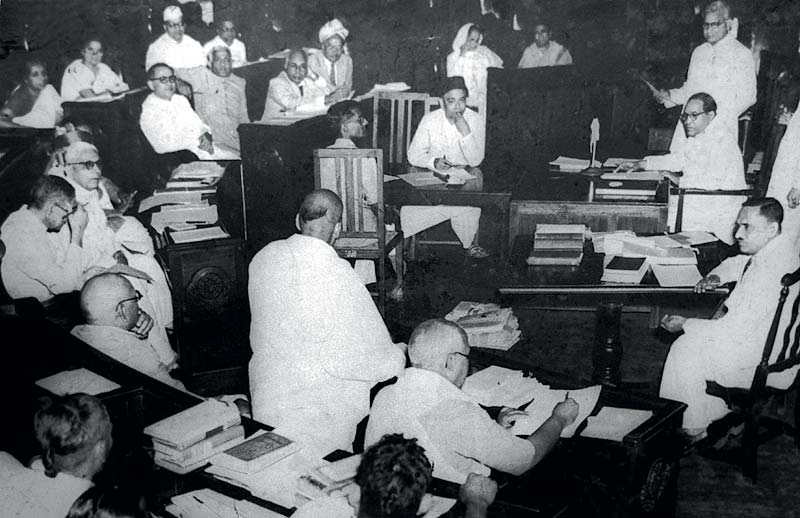
1. Historical Background & Pre-Constitutional Evolution
The Company Rule (1773–1858)
- Regulating Act of 1773:
- Great constitutional importance: first step by the British Government to control and regulate East India Company affairs; recognised for the first time its political and administrative functions; laid foundations of central administration in India.
- Designated Governor of Bengal as the “Governor-General of Bengal” and created a 4-member Executive Council to assist him (first was Lord Warren Hastings).
- Made Governors of Bombay and Madras subordinate to the Governor-General of Bengal.
- Provided for the establishment of a Supreme Court at Calcutta (1774) with one Chief Justice and three other judges.
- Prohibited servants of the Company from engaging in private trade or accepting presents/bribes from “natives”.
- Required the Court of Directors to report on revenue, civil, and military affairs to the British Government.
- Pitt’s India Act of 1784:
- British Parliament passed the Amending Act of 1781 (Act of Settlement) to rectify defects of the 1773 Act.
- Distinguished between commercial and political functions of the Company.
- Court of Directors managed commercial affairs; created a “Board of Control” to manage political affairs, establishing a system of “double government”.
- Board of Control supervised and directed all operations of civil and military government or revenues of British possessions.
- Territories in India were for the first time called the “British possessions in India,” and the British Government was given supreme control over Company affairs.
- Charter Act of 1833:
- Final step towards centralisation in British India.
- Made Governor-General of Bengal the “Governor-General of India”, vesting in him all civil and military powers (first was Lord William Bentinck).
- Deprived Governors of Bombay and Madras of legislative powers; Governor-General of India received exclusive legislative powers for the entire British India (laws previously called “Regulations”, now called “Acts”).
- Ended the Company’s commercial activities, turning it into a purely administrative body holding territories “in trust for His Majesty, His heirs and successors”.
- Attempted to introduce open competition for civil servants selection, stating Indians should not be debarred, but this provision was negated after opposition from the Court of Directors.
- Charter Act of 1853:
- Separated for the first time the legislative and executive functions of the Governor-General’s council.
- Added 6 new members (“legislative councillors”), creating the Indian (Central) Legislative Council, functioning as a mini-Parliament.
- Introduced an open competition system for civil servants recruitment; covenanted civil service was thrown open to Indians; Macaulay Committee appointed in 1854.
- Extended Company’s rule on trust for the British Crown without specifying a particular time limit.
- Introduced local representation in the Indian Legislative Council: 4 out of 6 legislative members were appointed by local governments of Madras, Bombay, Bengal, and Agra.
The Crown Rule (1858–1947)
- Government of India Act of 1858:
- Enacted after the Revolt of 1857 (First War of Independence / “sepoy mutiny”); known as the Act for the Good Government of India.
- Abolished the East India Company and transferred powers of government, territories, and revenues to the British Crown.
- Changed the designation of Governor-General of India to “Viceroy of India” (direct representative of the Crown; Lord Canning was the first).
- Ended double government by abolishing the Board of Control and Court of Directors.
- Created the office of Secretary of State for India, a member of the British Cabinet responsible to the British Parliament.
- Established a 15-member advisory Council of India to assist the Secretary of State (who was chairman); constituted Secretary of State-in-Council as a body corporate capable of suing and being sued.
- Indian Councils Act of 1861:
- Began representative institutions by associating Indians with law-making (in 1862, Lord Canning nominated the Raja of Benaras, the Maharaja of Patiala, and Sir Dinkar Rao to the legislative council).
- Initiated legislative decentralisation by restoring legislative powers to Bombay and Madras Presidencies.
- Provided for new legislative councils for Bengal (1862), NWFP (1866), and Punjab (1897).
- Recognised the “portfolio” system introduced by Lord Canning in 1859.
- Empowered Viceroy to issue ordinances during emergencies (validity: 6 months).
- Indian Councils Act of 1892:
- Increased additional (non-official) members in Central and provincial legislative councils, maintaining official majorities.
- Gave legislative councils the power to discuss the budget and address questions to the executive.
- Provided for nomination of non-official members by recommendations of provincial bodies, universities, zamindars, etc. (limited/indirect use of election, though the word “election” was not used).
- Indian Councils Act of 1909 (Morley-Minto Reforms):
- Increased size of Central Legislative Council from 16 to 60.
- Retained official majority at Centre, but allowed non-official majority in provincial legislative councils.
- Enlarged deliberative functions (asking supplementary questions, moving resolutions on budget).
- Associated Indians with executive councils of Viceroy and Governors (Satyendra Prasad Sinha was the first Indian to join the Viceroy’s Executive Council as law member).
- Introduced separate electorates for Muslims (“legalised communalism”); Lord Minto known as the “Father of Communal Electorate”.
- Government of India Act of 1919 (Montagu-Chelmsford Reforms):
- Demarcated and separated central and provincial subjects; relaxed central control but structure remained centralized and unitary.
- Introduced dyarchy in provinces: transferred subjects (administered by governor with ministers responsible to council) and reserved subjects (administered by governor and executive council without responsibility).
- Introduced bicameralism (Council of State and Legislative Assembly) and direct elections in the country.
- Required 3 of 6 Viceroy’s executive council members (other than commander-in-chief) to be Indian.
- Extended separate electorates to Sikhs, Indian Christians, Anglo-Indians, and Europeans.
- Granted limited franchise based on property, tax, or education.
- Created office of High Commissioner for India in London.
- Provided for establishment of a Public Service Commission (Central Public Service Commission set up in 1926).
- Separated provincial budgets from Central budget.
- Provided for a statutory commission after 10 years to inquire into its working.
- Simon Commission & Communal Award:
- Simon Commission appointed in November 1927 (headed by Sir John Simon; all 7 members British; boycotted by all parties); reported in 1930 recommending abolition of dyarchy and federation setup.
- Ramsay MacDonald announced the Communal Award in August 1932 extending separate electorates to depressed classes (Scheduled Castes).
- Poona Pact between Congress leaders and depressed classes retained joint electorates and gave reserved seats.
- Government of India Act of 1935:
- Contained 321 Sections and 10 Schedules.
- Provided for an All-India Federation consisting of provinces and princely states with three lists: Federal List (59 items), Provincial List (54 items), Concurrent List (36 items); residuary powers with Viceroy (federation never materialized).
- Abolished provincial dyarchy and introduced “provincial autonomy” (operated 1937–1939).
- Provided for dyarchy at Centre (did not come into operation).
- Introduced bicameralism in 6 out of 11 provinces (Bengal, Bombay, Madras, Bihar, Assam, United Provinces).
- Extended separate electorates to depressed classes, women, and labour.
- Abolished Council of India; extended franchise to ~10% of the population.
- Provided for the establishment of Reserve Bank of India, Federal Court (set up in 1937), Federal PSC, Provincial PSCs, and Joint PSCs.
- Indian Independence Act of 1947:
- Declared India independent and sovereign from August 15, 1947.
- Provided for partition and creation of two independent dominions (India and Pakistan) with the right to secede from the Commonwealth.
- Abolished offices of Viceroy and Secretary of State for India.
- Empowered Constituent Assemblies to frame/adopt any constitution, repeal British acts, and act as Dominion Legislatures until new constitutions were drafted.
- Lapsed British paramountcy over princely states and treaty relations with tribal areas.
- Provided for governance under GoI Act of 1935 with modifications until new constitutions were framed.
- Lord Mountbatten became the first Governor-General of independent India; swore in Jawaharlal Nehru as the first Prime Minister.
Download
1. Constitution of India tnpsc notes pdf
